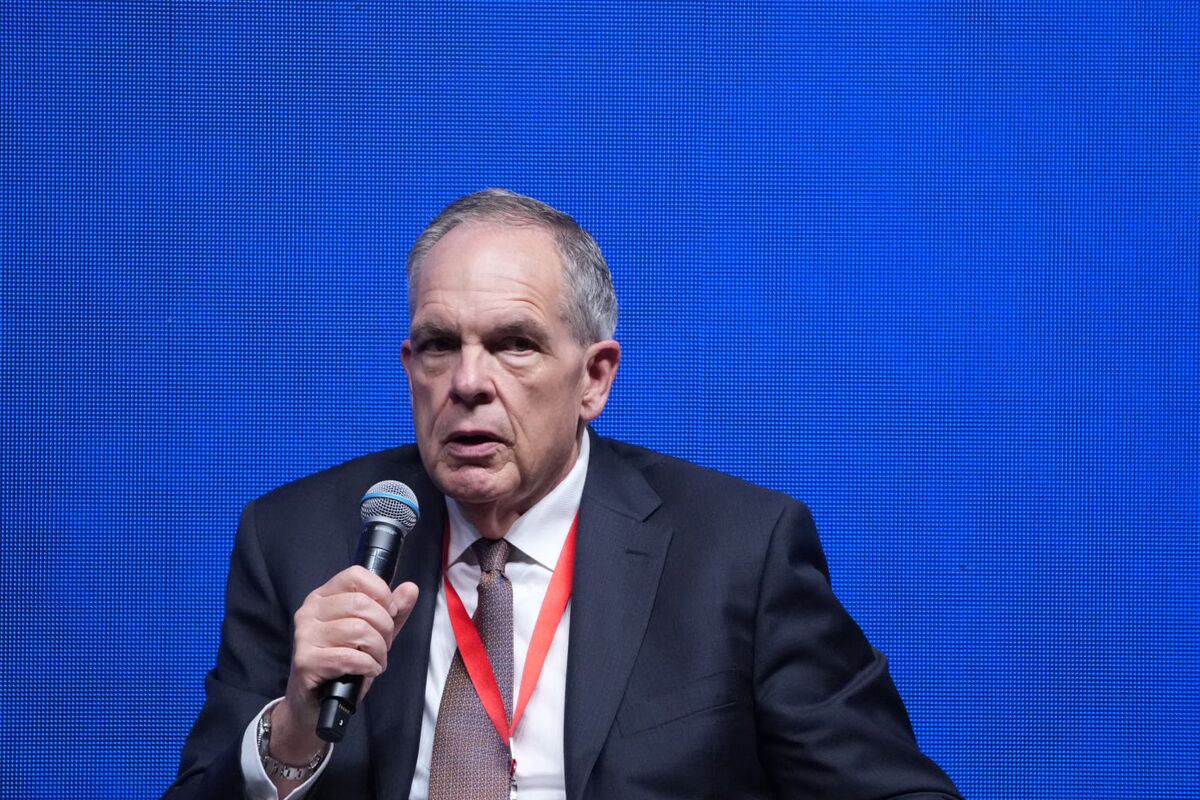
State Street CEO Ron O’Hanley characterized the Trump administration's immigration policy as "anti-growth" at the Hong Kong Monetary Authority’s Global Financial Leaders’ Investment Summit, identifying it as the primary challenge for the U.S. economy due to its impact on skilled foreign workers.
State Street CEO Ron O’Hanley characterized the Trump administration's immigration policy as "anti-growth" at the Hong Kong Monetary Authority’s Global Financial Leaders’ Investment Summit, identifying it as the primary challenge for the U.S. economy. This assessment specifically highlights the policy's disruptive impact on skilled foreign workers, a critical component of economic dynamism. The CEO's strongly negative sentiment and pessimistic tone underscore concerns about potential long-term economic headwinds for the U.S. Such policies could impede innovation and growth by restricting access to essential talent, thereby affecting various sectors reliant on a diverse, skilled workforce. This perspective from a major asset manager carries significant weight for institutional investors. While the per-ticker sentiment for State Street (STT) itself remains neutral, O'Hanley's comments signal a material macro risk. The identified themes of "Elections & Domestic Politics" and "Regulation & Legislation" confirm that policy uncertainty and its economic ramifications are key considerations for market participants. The moderate market impact score of 0.5 suggests this is a notable, though not immediately catastrophic, concern.
AI-powered research, real-time alerts, and portfolio analytics for institutional investors.
Request DemoOverall Sentiment
strongly negative
Sentiment Score
-0.70
Ticker Sentiment
