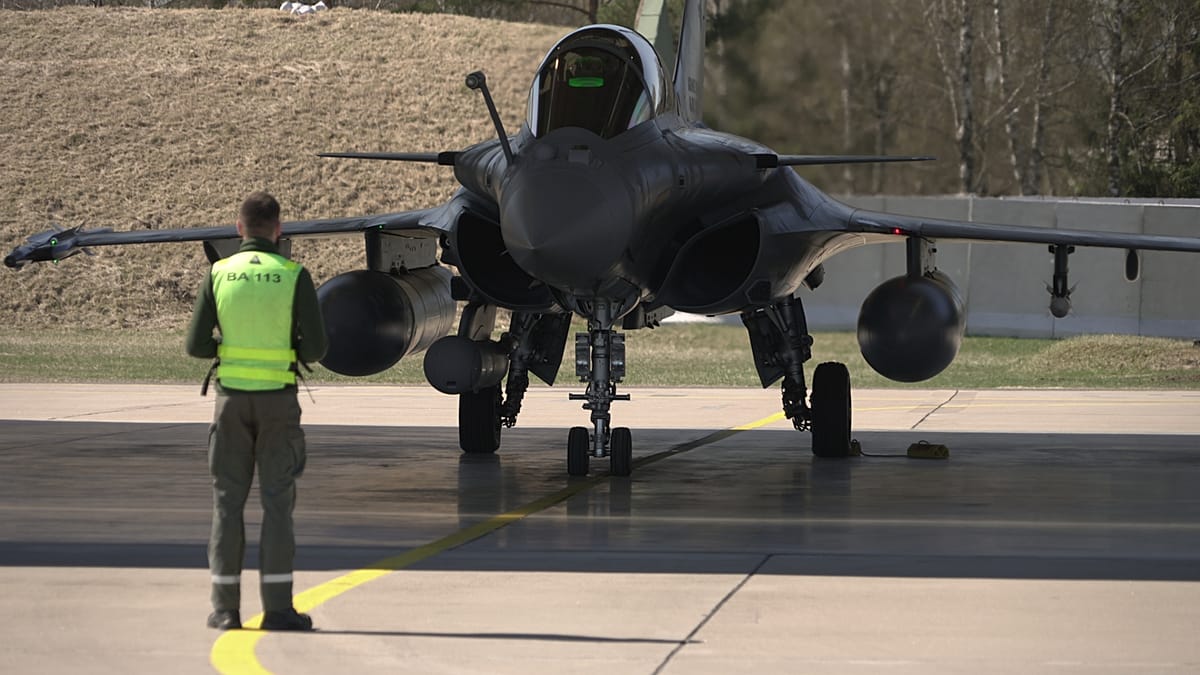
Latvia detected at least one UAV in its airspace and Lithuania temporarily shut Vilnius airport after a suspected drone threat near the Belarus border, prompting NATO jets to scramble. The Latvian military deployed additional units to the eastern border and warned residents to shelter indoors and call 112 if they see suspicious objects. The incident underscores elevated security risk on NATO's eastern flank, with Russia and Belarus cited by EU leadership as directly responsible.
This is less about the immediate drone count and more about the market repricing of Baltic perimeter risk. The first-order beneficiaries are defense platforms and counter-UAS suppliers, but the second-order trade is broader: every incremental airspace disruption increases the premium on layered air defense, border surveillance, electronic warfare, and rapid-response logistics. In Europe, that usually shows up first in order books, then in procurement budgets, and only later in equity multiples — so the initial move can be technical, but the follow-through can persist for quarters if incidents cluster.
The more interesting loser set is travel and regional infrastructure. Even brief airport suspensions can create outsized operational friction for small hubs with limited rerouting capacity, which means higher cancellation risk, insurance costs, and schedule unreliability relative to larger Western European peers. If the pattern repeats over days or weeks, the earnings impact is not just lost passengers; it is lower load factors, higher compensation expense, and softer business travel demand into the Baltic corridor.
The catalyst window is short on headlines but longer on policy. In the next 1-10 days, expect elevated risk premiums around Baltic airlines, airports, and cross-border transport. Over 1-6 months, the real driver is whether NATO/EU translates this into additional procurement and posture changes; if so, defense names with NATO exposure could outperform while travel names underperform on a lower-quality demand mix. The contrarian view is that the market may overestimate near-term kinetic escalation while underestimating the persistence of non-kinetic disruption: even if the threat de-escalates, the region has likely moved into a higher baseline security regime that supports defense spend without requiring open conflict.
From a trading perspective, this favors expressing the theme through listed defense exposure rather than trying to short a single travel event. The cleanest setup is a relative-value long defense / short travel pair, because the upside in defense budgets is multi-quarter while the downside in travel stocks can re-rate quickly on repeated disruptions. The key risk to the trade is a fast diplomatic de-escalation or a lack of follow-through incidents, which would compress the geopolitical premium before procurement flows show up.
AI-powered research, real-time alerts, and portfolio analytics for institutional investors.
Request DemoOverall Sentiment
strongly negative
Sentiment Score
-0.55
