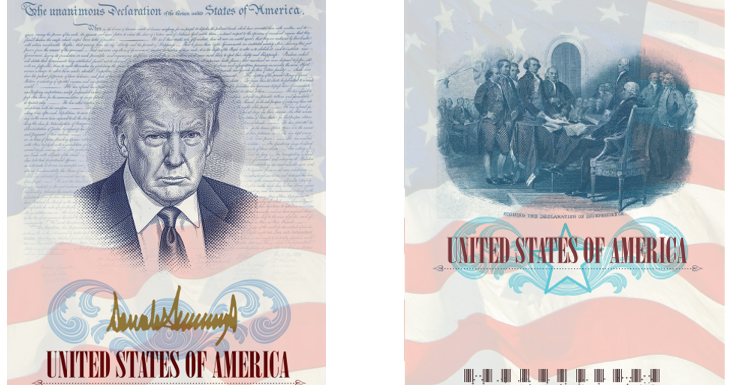
The State Department is planning a limited-edition U.S. passport redesign for the nation's 250th anniversary in July, featuring President Trump's portrait and signature over Declaration of Independence text. The special passports would be available first at the Washington Passport Agency at no extra fee, while existing designs remain elsewhere. The article is largely political and commemorative in nature, with minimal direct market impact.
This is less a direct macro event than a signal about the administration’s willingness to monetise state branding as political theatre, which raises the odds of more non-economic “priority” spending and procurement decisions flowing to politically connected vendors. The second-order winner set is narrow but real: specialty security printing, personalized-documents manufacturers, and identity-authentication software vendors could see incremental demand if agencies lean into commemorative or customized document runs. The bigger market implication is not revenue but attention allocation — agencies can temporarily distort procurement calendars and invite scrutiny on anything touching secure document design, which tends to slow broader rollouts and creates execution risk for incumbents with federal exposure.
The catalyst window is short for the newsflow, but medium for the policy ramifications. In the next 1-3 months, the key risk is backlash from Congress, civil service, or litigation arguing the program is politicizing a core state document; that would cap any commercialization premium and could force a narrower rollout. Over 6-12 months, if the pattern expands to currency, coins, and other federal marks, the market should think in terms of a modest but persistent uplift for firms in anti-counterfeiting, secure substrates, and secure personalization — while also a higher headline-risk discount for vendors dependent on discretionary federal branding decisions.
The consensus is likely underestimating how quickly this can become a procurement and compliance story rather than a culture-war headline. That matters because the economics favor a few specialized suppliers, not the broad market, and the event can create a false read-through into consumer demand where there is none. The contrarian angle is that the move is probably overhyped politically but underappreciated operationally: even a limited pilot can lengthen lead times and reorder existing contract awards, which is where tradable alpha can emerge.
If the rollout is constrained to one issuance channel, the revenue impact is immaterial, but the signaling risk to federal branding and security-doc vendors is still meaningful. If the administration expands the concept to higher-volume documents, that could become a multi-quarter procurement cycle with better economics for incumbents than for new entrants, particularly those already embedded in passport/ID ecosystems.
AI-powered research, real-time alerts, and portfolio analytics for institutional investors.
Request DemoOverall Sentiment
neutral
Sentiment Score
0.05
