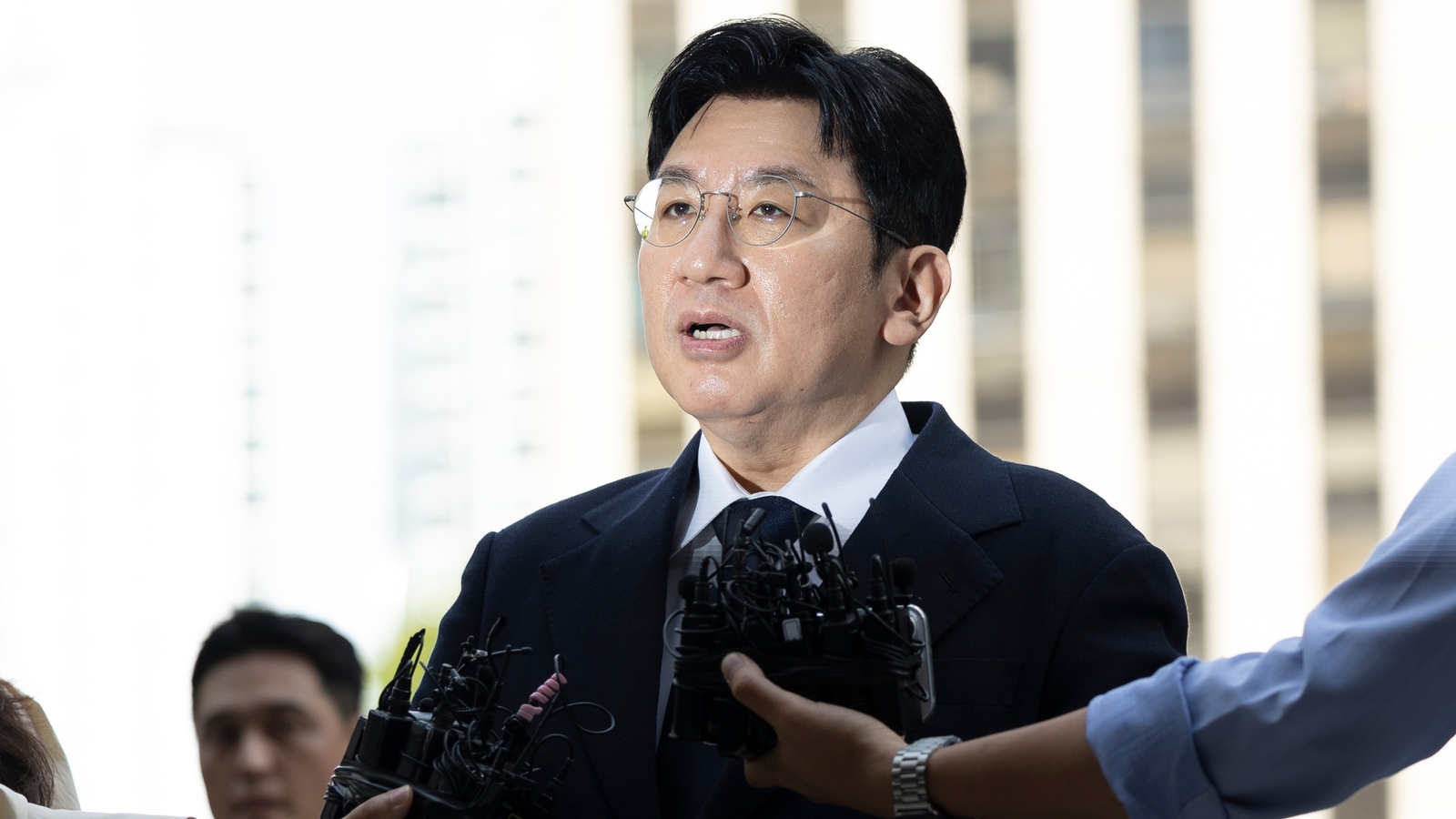
South Korean police are seeking to arrest Hybe chairman Bang Si-Hyuk over allegations he misled investors in 2019 and illegally gained more than $100 million in a private deal tied to Hybe's IPO. Police believe Bang may have received about 200 billion won ($136 million) in a side agreement linked to 30% of post-IPO stock sale profits. The case is a major governance and legal setback for Hybe amid BTS's global tour and continuing internal turmoil.
This is less a headline risk for BTS than a governance reset risk for Hybe’s valuation multiple. The market typically tolerates celebrity-key-man risk until it collides with financing integrity; once that happens, the penalty shows up in lower strategic optionality, higher cost of capital, and a wider discount on any future M&A or capital raises. The most important second-order effect is that Hybe’s growth narrative shifts from “global platform compounding” to “litigation overhang plus related-party scrutiny,” which can compress the equity multiple well before any operational damage appears.
The near-term loser is Hybe’s ability to use equity as acquisition currency. If management distraction persists into 1H26, expect a harder stance from counterparties, lower confidence among minority holders in subsidiary structures, and more scrutiny on whether cash generated by BTS’s comeback can be recycled into growth or instead gets trapped in legal reserve-building and governance remediation. That matters because entertainment conglomerates trade on trust premiums; once those erode, the market often assigns them closer to cyclically challenged media peers than premium IP platforms.
A second-order beneficiary could be independent K-pop agencies and concert promoters that can market themselves as cleaner governance alternatives to capital allocators and strategic partners. If the dispute bleeds into artist relations, talent retention becomes the real risk: not an immediate revenue hit, but a gradual weakening of Hybe’s roster quality and negotiating power over the next 12-24 months. The consensus may still be underpricing how much a founder arrest motion raises the probability of board reshuffles, shareholder activism, and a forced simplification of Hybe’s structure.
The contrarian view is that the selloff risk may be front-loaded: legal process in Korea can be slow, and absent a rapid indictment or asset freeze, the operating business may continue to monetize BTS’s reunion cycle without interruption. That creates a window for relief rallies on any sign that the arrest request stalls or is narrowed. But the asymmetric risk remains on the downside because governance events tend to re-rate slowly and recover only after formal resolution, not after denials.
AI-powered research, real-time alerts, and portfolio analytics for institutional investors.
Request TrialOverall Sentiment
strongly negative
Sentiment Score
-0.72
