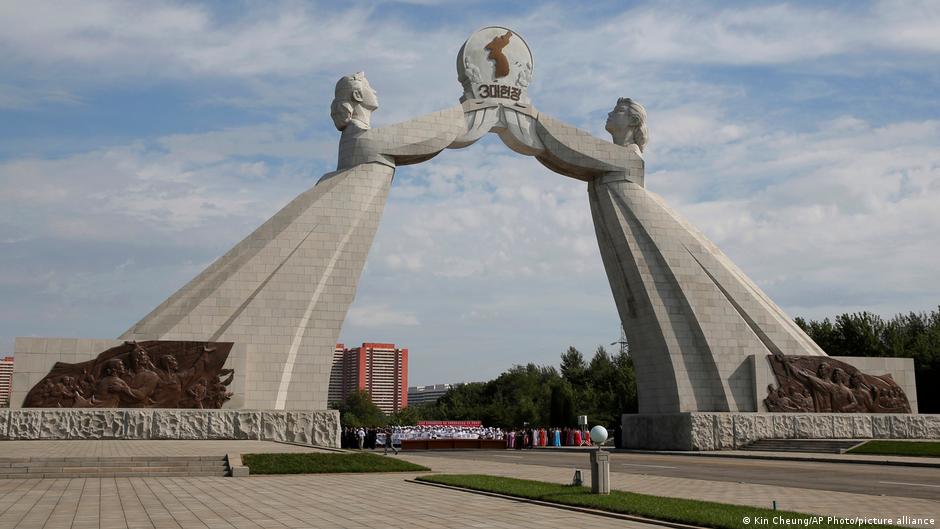
North Korea has removed all references to reunification with South Korea from its constitution, also redefining its territory and formalizing Kim Jong Un’s authority over nuclear forces. The change underscores a sharper, more hostile stance toward Seoul, following Kim’s 2023 designation of South Korea as the 'main enemy' and recent missile activity. While the move is largely political, it materially raises geopolitical risk on the Korean peninsula and could affect regional security sentiment.
This is less about near-term kinetic escalation than about Pyongyang normalizing a two-state framework, which lowers the odds of symbolic reunification diplomacy and raises the probability of a longer, more militarized stalemate. The immediate market read-through is modest, but the second-order effect is on risk premia: any South Korea-sensitive assets tied to cross-border reopening, tourism, logistics, or peninsula de-escalation should see a lower terminal valuation assumption over the next 6-18 months.
The more important signal is institutionalization of nuclear command authority. That increases regime credibility around deterrence and makes back-channel denuclearization talks even less likely, which should support a persistent bid in regional defense supply chains. The winner set extends beyond Korean primes to U.S. missile defense, ISR, and munitions names, while the loser set includes export-sensitive Korean cyclicals that benefit from lower geopolitical discount rates only when the peninsula is perceived as stabilizing.
Contrarianly, the market may be overestimating the chance of immediate escalation. Removing reunification language can also be read as a way to reduce domestic policy ambiguity and avoid accidental crisis spirals; that can dampen headline risk after the initial reaction. The true tail risk is not invasion, but a higher baseline of low-level provocations and missile testing that keeps South Korea’s equity multiple capped without triggering a full risk-off shock.
The cleanest trade is to own defense optionality while fading overly aggressive hedges on Korea macro risk. If Seoul-linked assets have sold off on the headline, that may be a better entry point for selective longs than broad index shorts, because the event lowers long-term reconciliation odds more than it changes the next few weeks of growth or trade data.
AI-powered research, real-time alerts, and portfolio analytics for institutional investors.
Request DemoOverall Sentiment
mildly negative
Sentiment Score
-0.15
