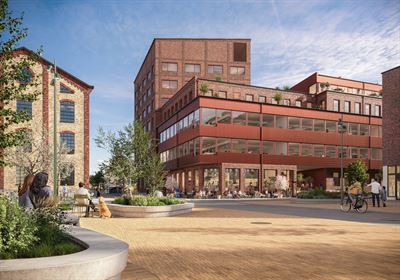
Wihlborgs has signed a six-year lease with the Swedish Transport Administration for 1,665 square metres of newly built office space in Posthornet 1, central Lund, with occupancy planned for summer 2026 as part of the development's second phase. The deal enhances the Sockerbruket project's tenant mix alongside other public and private occupants and supports Wihlborgs’ local development strategy; the company reports a property book value of SEK 63 billion and an annual rental value of SEK 4.9 billion, though the transaction is unlikely to move broader markets.
Market structure: This lease is a positive but micro-scale win for Wihlborgs (WIHL.ST) — 1,665 sqm with a six-year public-sector tenant increases occupancy and tenant-quality in a strategic Lund node but only moves the firm's SEK4.9bn rental base by roughly SEK3–4m/year (~0.07%). Winners: Wihlborgs, street-level F&B (Segers Mat) and adjacent premium landlords in Sockerbruket; losers: secondary suburban landlords in southern Skåne facing widening cap‑rate dispersion. Cross-asset: negligible FX/commodity impact; expect modest tightening of WIHL credit spreads (5–15bps) if similar leases continue. Risk assessment: Tail risks include a 200–300bp hike in Swedish rates compressing NAVs 10–20%, or a policy-led remote-work mandate reducing office demand; construction delay or tenant consolidation are 5–15% probability medium-impact events. Immediate market effect is nil; watch short-term (next 12 months) for construction milestones and long-term (2026–2029) for lease renewals. Hidden dependencies: municipal approvals, concentration in Öresund and public-sector lease renewals. Trade implications: Tactical long in WIHL.ST is justified (see decisions) — this is a play on premium urban office scarcity and sticky public tenants rather than a macro reflation trade. Use limited-risk options (calendar or call spreads expiring mid‑2026) to capture the lease-up/visibility with defined downside. Rotate portfolios modestly into urban/nodal office landlords and away from secondary retail/low-quality suburban offices. Contrarian angle: The market’s fear of structural office obsolescence likely over-penalises high-quality, centrally located nodes anchored by universities and public tenants (Lund = life-science + transport hub). Expect cap‑rate dispersion to widen; mispricings will appear in small-cap holders of secondary stock where distress risk is real. Unintended consequence: concentration into “safe” urban landlords can create valuation crowding if rates shock recurs.
AI-powered research, real-time alerts, and portfolio analytics for institutional investors.
Request DemoOverall Sentiment
mildly positive
Sentiment Score
0.25
