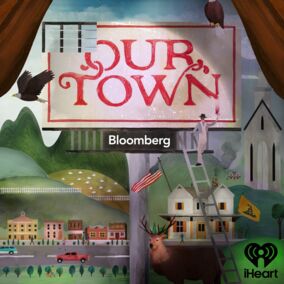
The article is a promotional note for a Bloomberg podcast episode (“Our Town Chapter 3”) about a far-right Christian community backed by venture capital in a small Tennessee town. It contains no company financials, policy decisions, macro data, or market-moving information. As such, it is informational/cultural content with no identifiable impact on financial markets.
This is not a clean public-markets event; the investable signal is only at the level of scalable social infrastructure. If this model stays local, the economic impact is trapped in illiquid land, construction, and private donations, which means no obvious listed beneficiary and little reason for immediate factor rotation.
The second-order question is whether a church-led enclave model becomes replicable: if it does, the winners are the enablers rather than the ideology itself — rural land banks, modular builders, private school vendors, security, and niche media/commerce rails. But that scaling path is slow, capital intensive, and vulnerable to governance failure, donor fatigue, zoning pushback, and leadership scandals, so the base rate is that most of these experiments stall before they matter to earnings.
The contrarian read is that investors may overestimate the durability of “values migration” and underestimate execution friction. Even when these communities do attract families, the public-market translation is usually diluted across many small vendors and regional asset owners, making it hard to get paid through a single listed equity. The only actionable thesis would require evidence of repeatable land acquisition, permit approvals, and enrollment growth over the next 6-18 months; absent that, this is a watch item, not a trade.
AI-powered research, real-time alerts, and portfolio analytics for institutional investors.
Request DemoOverall Sentiment
neutral
Sentiment Score
0.00
