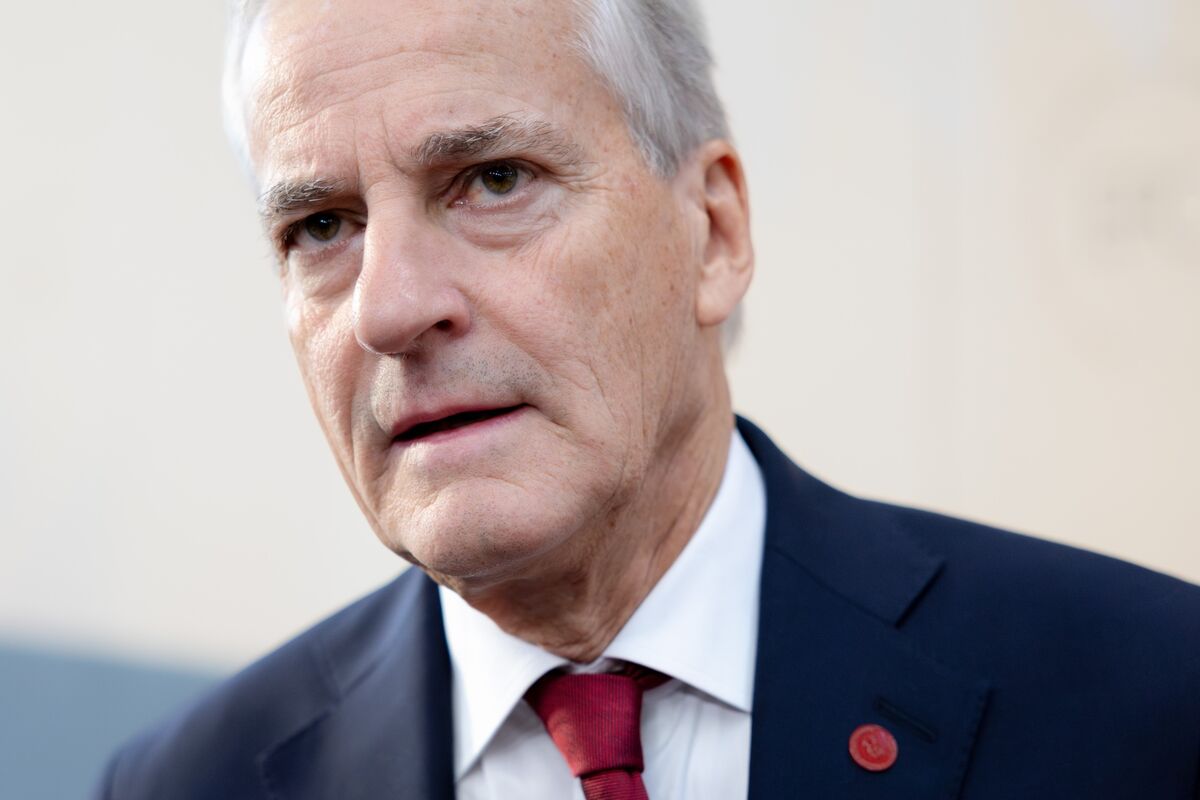
Norway's ruling Labor Party, led by Premier Jonas Gahr Store, failed to secure backing from all coalition partners for next year’s budget after two parties exited talks over climate and social spending, leaving a late agreement with two smaller center-left groups short of a parliamentary majority. The impasse raises the prospect of a cabinet crisis just three months after reelection, increasing policy uncertainty around Norway’s fiscal trajectory and posing downside risks to investor confidence and domestic market sentiment.
Market structure: A fractious budget process increases political risk premium for Norway-focused assets; direct winners are domestic oil & gas producers if climate-spending cuts reduce renewables support, losers are Norway-exposed green developers and consumer-facing names if austerity follows. Expect temporary widening of bid-ask spreads in NOK-denominated equities, 3-6bp higher tail risk premia in 5-10y Norwegian government yields, and +1-3% intra-month NOK volatility against EUR/USD if debate persists. Energy capex decisions (upstream approvals) could shift pricing power toward incumbents (Equinor/EQNR, DNO) versus new-build renewables by 6-12 months.
Risk assessment: Tail scenarios include a snap election within 60 days (low-probability ~20% but high-impact), a surprise windfall tax on hydrocarbons (>10% effective rate shock), or prolonged minority government causing fiscal stalemate and GDP haircut of 0.5-1% over 12 months. Near-term (days) risk is FX and bond repricing; short-term (weeks–months) is sector rotation and capex deferral; long-term (quarters–years) is regulatory drift on climate policy and tax stability. Hidden dependency: Norges Bank policy path — political instability could delay hikes, amplifying NOK weakness.
Trade implications: Favor tactical overweight oil & gas equities (EQNR, DNO) and underweight Norway-focused renewable developers (e.g., SCATC) for 3–9 months; implement FX hedges (buy 3-month USDNOK calls or put NOK spots) sized to 1–3% NAV. Use options to express asymmetry: buy EQNR 3-month call spreads (25–40% upside target) and buy NOK puts 3-month ATM with 5–8% move as trigger; shorten duration in NGB holdings or buy 2y protection if budget vote fails. Entry window: act within 0–30 days ahead of formal budget vote, trim into any >10% rally.
Contrarian angles: Consensus assumes political noise is transient; miss: a compact minority could force pragmatic compromises that delay green subsidies, structurally favoring oil services for 12–24 months — this is underpriced in equities and FX. Reaction may be overdone in NOK sovereign curve; if a compromise arrives within 30 days, NOK could rebound 2–4% rapidly. Historical parallel: 2013 Scandinavian episodic budget standoffs produced short-lived FX moves but multi-quarter sectoral reallocation; downside is a snap election that could introduce policy shocks, so size positions to 2–4% NAV and use tight stops.
AI-powered research, real-time alerts, and portfolio analytics for institutional investors.
Request DemoOverall Sentiment
moderately negative
Sentiment Score
-0.40
