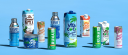





Piper Sandler previewed Q1 2026 for beverage names, flagging Vita Coco U.S. retail sales growth of 29.1% year to date versus 21.5% modeled, while Monster Beverage ran at 15.2% versus a 16.0% estimate and PepsiCo’s segment sales were broadly in line to slightly below expectations. Piper Sandler sees roughly $2 million of residual tariff costs at Vita Coco and expects PepsiCo gross margins to fall 25-50 bps in Q1, while Monster’s gross margin is modeled at 55.3% versus 55.5% consensus. Separately, Morgan Stanley and Jefferies reiterated bullish views on Monster with $96 and $100 price targets, and Goldman Sachs cut its 2026 U.S. consumer discretionary spending forecast to 4.2% on higher oil prices tied to geopolitical tensions.
The near-term setup favors the branded beverage complex, but not equally. The clearest dispersion is between execution-sensitive growers and mature cash cows: COCO’s selloff looks more like de-risking than a broken demand story, because the implied tariff drag is small relative to the category’s strong velocity, while MNST’s consistency supports a premium multiple even if volume growth moderates. The bigger second-order effect is shelf-space allocation: if MNST and COCO continue outperforming, distributors and retailers may prioritize them over weaker adjacent players, pressuring smaller hydration and energy brands on visibility and promo spend.
PEP is the more interesting strategic short-duration trade, not because demand is collapsing, but because margin expectations may be too complacent heading into a quarter with layered cost headwinds and planned ad reinvestment. The market tends to underappreciate how quickly incremental A&P can cap operating leverage when top-line momentum is already sluggish; that makes upside in the quarter more likely to be muted even if the headline sales print is fine. In other words, the risk is not a miss in revenue, but a “meet-and-cut” style reaction if gross margin and productivity commentary fail to offset cost inflation.
The macro overlay matters for all three names: higher fuel prices are a tax on the consumer before they become a catalyst for staples defensiveness. That usually helps PEP relative to discretionary, but when oil shocks are modest and transitory, the biggest beneficiaries are still volume-elastic beverages with strong brand equity and low price-per-ounce exposure. The contrarian view is that MNST’s multiple already prices in persistence, so the better expression may be COCO on a six- to twelve-month rebound if tariff costs normalize and the selloff leaves the stock at a discount to its own growth profile.
AI-powered research, real-time alerts, and portfolio analytics for institutional investors.
Request TrialOverall Sentiment
neutral
Sentiment Score
0.15
Ticker Sentiment
