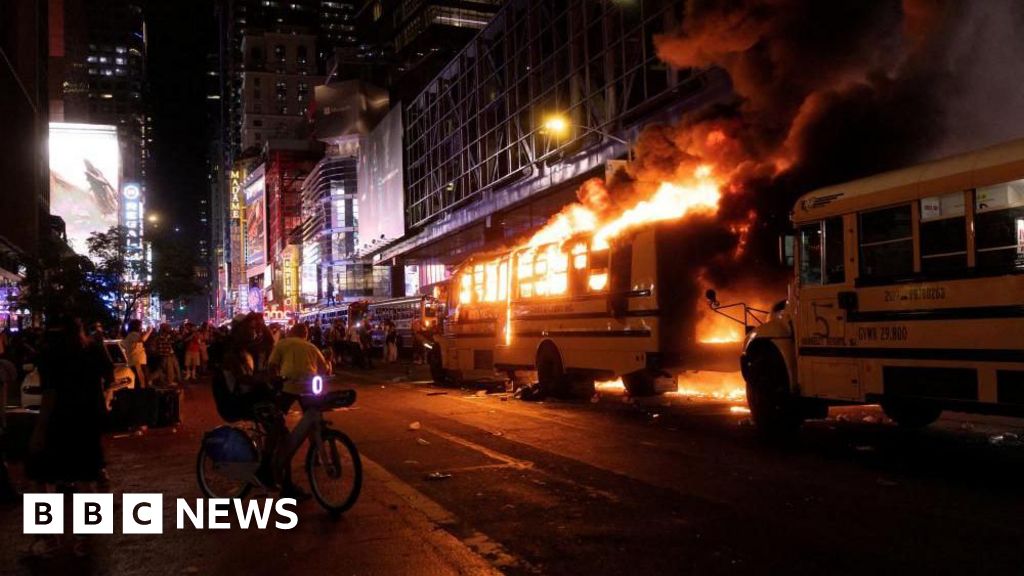
The Knicks clinched their first NBA title in more than 50 years with a 94-90 win over the Spurs, triggering large public celebrations in New York City. Those celebrations turned violent in Midtown Manhattan, with a 17-year-old shot in the foot, five school buses torched or destroyed, 63 arrests, and 10 police officers injured. The article is primarily a civic/public safety story with limited direct market relevance.
The immediate market read is not on basketball; it’s on urban activity, policing costs, and short-duration consumer behavior. A one-night civic event with disorder tends to pull spend forward rather than destroy it: bars, ride-hailing, quick-service, convenience retail, and late-night delivery usually see a localized spike, while the downstream loser is the city’s “friction premium” — higher security, cleanup, and transit disruptions that can cap incremental foot traffic after dark.
The second-order issue is not the melee itself but the optics of high-visibility violence around a rare positive city catalyst. That can subtly pressure tourist intent at the margin for the next 1-2 weeks, especially around Midtown and Times Square, where discretionary spend is already highly elastic to perceived safety. If there is follow-on tightening of permits, barriers, or event policing around the parade/city ceremony, the celebration itself becomes a larger operating cost and reduces the conversion of fandom into retail/tourism dollars.
From a positioning lens, this is too small to justify a broad macro short, but it is a good event-driven setup for relative value. The market often overestimates the durability of sentiment shocks and underestimates who monetizes the afterparty: delivery, transit substitutes, and convenience channels can pick up share even when traditional in-person activity gets disrupted. The clean contrarian is that headline violence is usually bearish for sentiment, but the underlying consumption impulse around a championship is still net positive over the next several days.
Catalyst path matters: the next 48 hours should see the strongest data distortion, while the parade is the real test for whether the city can translate pride into orderly spending. If the follow-up events are contained, the selloff in anything linked to New York leisure/tourism should fade quickly; if not, the issue shifts from a one-off to a public-safety narrative with a longer drag on late-night consumer traffic and local merchandising.
AI-powered research, real-time alerts, and portfolio analytics for institutional investors.
Request DemoOverall Sentiment
mildly negative
Sentiment Score
-0.15
