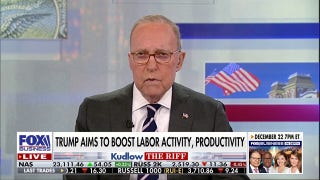
Former White House economic adviser Larry Kudlow argued that delayed government data show resilient retail sales and solid but unspectacular job gains—federal employment down about 270,000 while private payrolls are up roughly 700,000, native‑born jobs +2.7 million vs. foreign‑born jobs down ~1 million—and middle‑class wages are rising about 5% year‑on‑year. He attributed a sharp fall in oil prices (WTI from roughly $80 to $55 YTD) to booming U.S. output (~13.8m b/d) driven by “drill” incentives, noting national gasoline averages below $3 but wide state dispersion, and argued that lower energy costs will materially depress inflation readings. Kudlow concluded that energy‑led disinflation could meaningfully increase real wages (roughly a 3 percentage‑point boost) and open the door to significantly lower interest rates, outcomes he credits to deregulation and tax incentives under the Trump administration.
Delayed government releases cited by Larry Kudlow show resilient retail sales alongside what he calls decent but unspectacular job growth: federal employment has fallen roughly 270,000 year-to-date while private payrolls have increased about 700,000, native‑born jobs are up ~2.7 million and foreign‑born jobs are down nearly 1 million. The unemployment rate edged higher as displaced federal workers searched for roles, yet middle‑class wages rose roughly 5% year‑on‑year, a pace Kudlow highlights as materially outpacing current inflation.
West Texas Intermediate oil has declined from about $80 to $55 year‑to‑date while U.S. crude production is running near 13.8 million barrels per day, a level the commentator says exceeds domestic demand; nationwide gasoline averages have fallen to under $3 per gallon (Oklahoma ~$2.30, California ~$4.35). Kudlow attributes the production surge to deregulatory and tax incentives, arguing lower energy costs will permeate goods prices and depress inflation measures in coming months.
If oil‑driven disinflation materializes as described, CPI readings could decelerate and create scope for lower interest rates, effectively boosting real wages by roughly three percentage points versus recent inflation. The scenario hinges on sustained production/demand dynamics and policy developments; investors should monitor upcoming inflation prints, oil price trajectories and labor‑market composition for confirmation of a durable trend.
AI-powered research, real-time alerts, and portfolio analytics for institutional investors.
Request DemoOverall Sentiment
moderately positive
Sentiment Score
0.50
