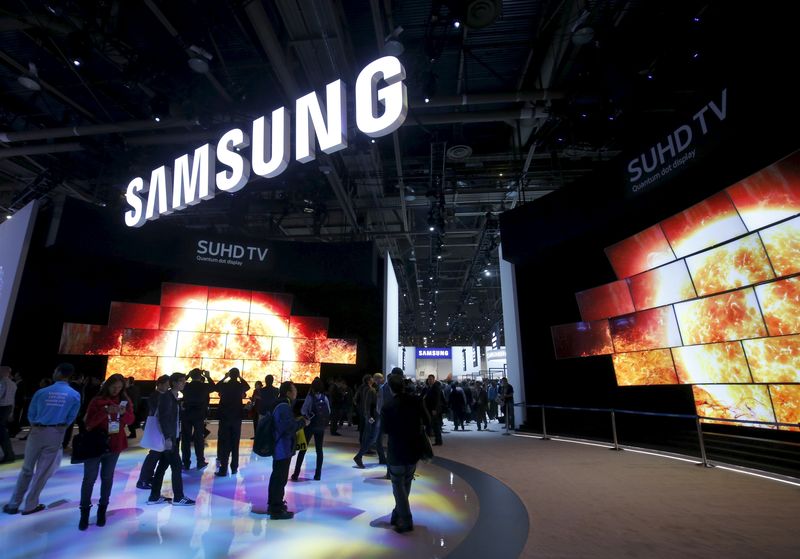
Samsung Electronics shares jumped as much as 10% after a report that the company may execute up to 90 trillion won ($59 billion) of additional treasury share purchases over the next three years to fund employee stock compensation and performance bonuses. Yonhap estimated Samsung may need to acquire about 290 million shares, or roughly 5% of outstanding common stock, which could reduce free float and support the share price. The report also underscores Samsung’s increased reliance on stock-based incentives as it competes for AI and high-bandwidth memory talent.
This is less a clean buyback story than a supply-management event. The market is likely underappreciating the mechanical reduction in tradable float: if a meaningful share of repurchased stock is sequestered for compensation and vesting constraints, marginal liquidity falls just as AI/HBM sentiment is already chasing semiconductor beta higher. That can create a multi-quarter support bid for the stock even if underlying earnings revisions are only modestly positive.
Second-order winners are the adjacent beneficiaries of the AI infrastructure trade, especially U.S. names with cleaner execution and higher operating leverage than diversified hardware incumbents. If capital returns are being used to keep talent and align labor, the signal is that Samsung is defending strategic capability, not just returning excess cash; that typically tightens the competitive race in memory and raises the bar for peers on retention, capex efficiency, and product cadence. Any disappointment in AI memory pricing or yield ramps would matter more now because the buyback thesis is partly funding-driven, not purely free-cash-flow-driven.
The key risk is that this becomes a headline-positive but economically neutral rerating: if treasury shares merely offset compensation issuance, the net shareholder yield may be far smaller than the gross purchase figure suggests. The trade should work over months if the market keeps rewarding float scarcity and AI optionality, but it can unwind quickly if management guidance reveals a slower pace of repurchases, weaker margin outlook, or a need to preserve cash for capex. Consensus may be missing that the real catalyst is not the announcement itself, but the implied cadence and lock-up schedule over the next 6-18 months.
AI-powered research, real-time alerts, and portfolio analytics for institutional investors.
Request DemoOverall Sentiment
mildly positive
Sentiment Score
0.35
Ticker Sentiment
