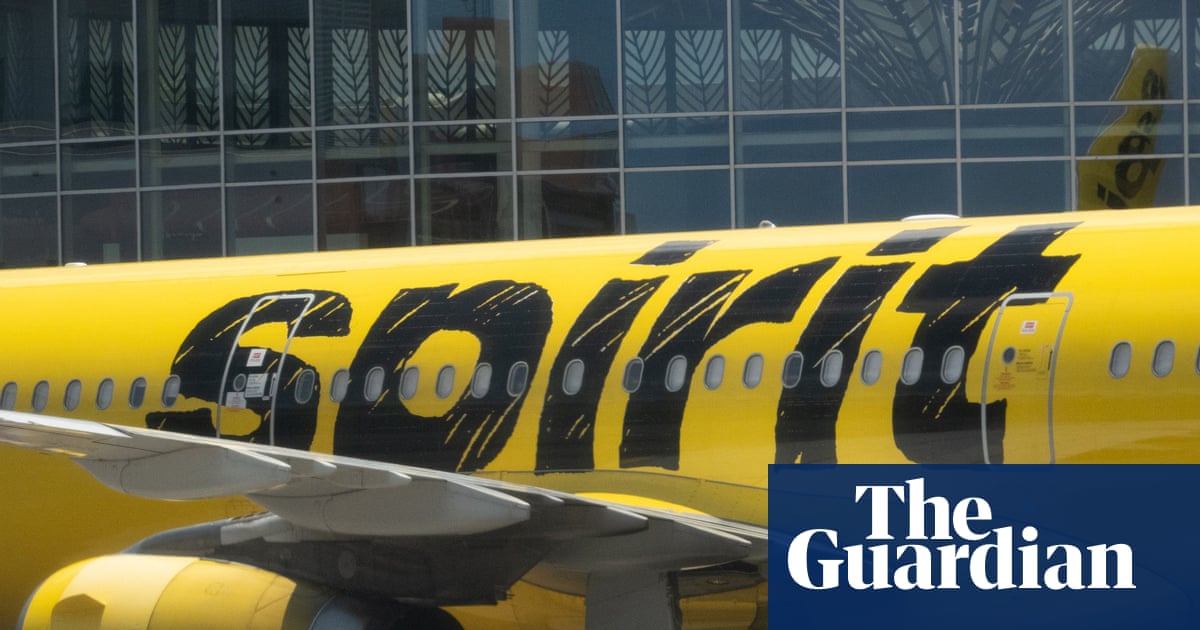
Spirit Airlines is preparing to cease operations after running out of cash, with a rescue effort reportedly stalling and creditors failing to reach a funding deal. The article says a potential $500 million federal loan was under discussion, while a $3.8 billion JetBlue merger had already been blocked on antitrust grounds in 2024. A liquidation would be the first major U.S. airline failure since the 2008 recession and could reduce competition, raising fares for consumers.
The liquidation risk is less about one airline and more about a forced re-pricing of the ultra-low-cost model. If the weakest player disappears, capacity discipline improves across the domestic short-haul market, but the gains are uneven: the biggest beneficiaries are the carriers with enough network breadth to hold fares without chasing volume. That favors AAL more as a relative share-gainer than as a pure earnings re-rating, because it can absorb marginal traffic while Spirit’s exit removes the price anchor that pressures yields on dense leisure routes.
Second-order, the bigger impact is on consumer elasticity and ancillary pricing power. Spirit’s model trained a large base of price-sensitive travelers to accept unbundled fees; if that capacity evaporates, incumbents can widen the spread between headline fares and total ticket cost without as much pushback. The market may underappreciate how quickly this can flow through: fare read-through can happen within weeks, while actual cost savings from lower competition can compound over 2-3 quarters as inventory resets.
The political angle is a wildcard but also a tell: a federal rescue would likely create moral hazard for the sector and cap downside in near term, yet it would not solve the structural mismatch between fuel costs and low-fare demand. If a bailout fails, the near-term risk is a disorderly liquidation that disrupts leisure travel capacity and pressures regional route economics; if a bailout succeeds, the trade becomes more about temporary volatility than fundamental salvation. Either way, the consensus may be too focused on Spirit’s bankruptcy as an isolated event rather than a catalyst for industry-wide pricing power and a higher floor for domestic fares.
Contrarianly, this is not automatically bearish for all airlines. The market may be overestimating the benefit to ULCC peers if the result is simply a redistribution of unprofitable traffic rather than durable margin expansion. The cleaner long is the carrier best positioned to monetize fewer seats at higher fares, while the cleanest short is the weakest balance sheet in the ULCC complex if creditors and lenders decide the rescue is just postponing liquidation.
AI-powered research, real-time alerts, and portfolio analytics for institutional investors.
Request DemoOverall Sentiment
extremely negative
Sentiment Score
-0.88
Ticker Sentiment
