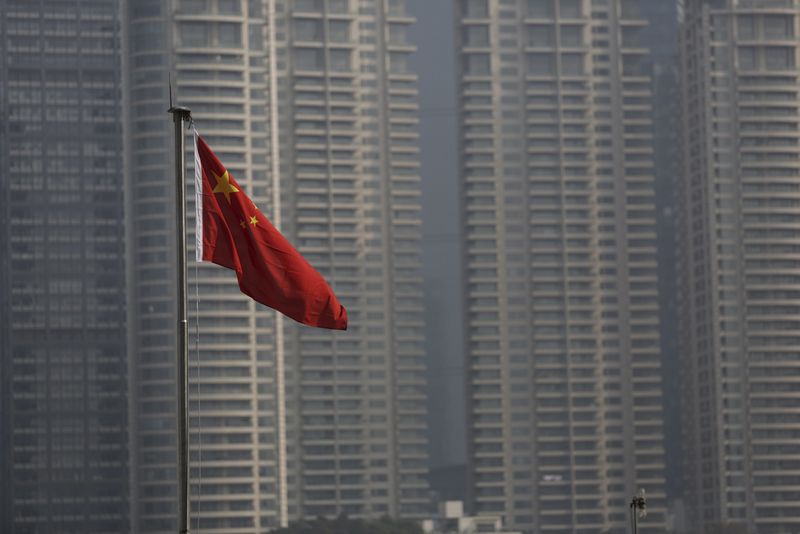
Chinese regulators are reportedly preparing restrictions that would block tech companies, including AI startups such as Moonshot AI and StepFun, from taking U.S. capital without Beijing approval. The guidance also appears aimed at ByteDance secondary share sales to U.S. investors and is tied to concerns over foreign ownership in strategically sensitive sectors. The move could curb cross-border funding for Chinese tech and AI firms and raises regulatory risk for U.S. capital flows into China-linked private markets.
This is less about a single funding rule and more about Beijing tightening control over who gets to own strategic AI optionality. The second-order effect is a widening discount on China-based private AI assets: if U.S. capital becomes harder to admit, later-stage rounds will increasingly depend on domestic pools that are smaller, less price-sensitive, and more policy-driven. That typically means lower deal velocity, higher dilution for founders, and a greater probability that the most attractive names delay IPOs or accept suboptimal terms.
The larger market implication is that the U.S. loses a clean “China AI growth” sleeve while capital may rotate toward domestic beneficiaries of the same geopolitics. If Chinese AI startups cannot tap U.S. money, they may seek more compute, cloud, and model-development capacity from domestic vendors, but the near-term bottleneck is financing rather than technology. That makes the biggest losers the private-market platforms and crossover investors that rely on asymmetric access; the winners are likely mainland exchanges, state-linked capital, and U.S. incumbents with less China exposure, not necessarily the frontier startups themselves.
META is the more interesting marginal loser because it had been benefiting from a narrative that global AI capital can still arbitrage regulatory gray zones. A Beijing clampdown raises the expected cost of any future offshore structuring, secondary transactions, or strategic acquisitions involving Chinese AI talent and IP. Over the next 1-3 months, the tradeable reaction is probably more about sentiment drag and multiple compression than direct earnings impact, but over 6-12 months the risk is a measurable reduction in cross-border M&A and a higher probability that Chinese authorities retaliate against outbound U.S. capital in adjacent sectors.
The contrarian view is that this may be a headline-driven tightening rather than a regime change. If enforcement is selective, the best franchises can still route capital through non-U.S. vehicles or approved structures, which limits the long-term impact on top-tier names while crushing weaker ones. In that case, the market is likely overpricing systemic damage and underpricing dispersion: the right expression is not a broad short China AI basket, but a relative-value trade favoring companies with clean domestic funding access over those dependent on cross-border capital.
AI-powered research, real-time alerts, and portfolio analytics for institutional investors.
Request TrialOverall Sentiment
moderately negative
Sentiment Score
-0.30
Ticker Sentiment
