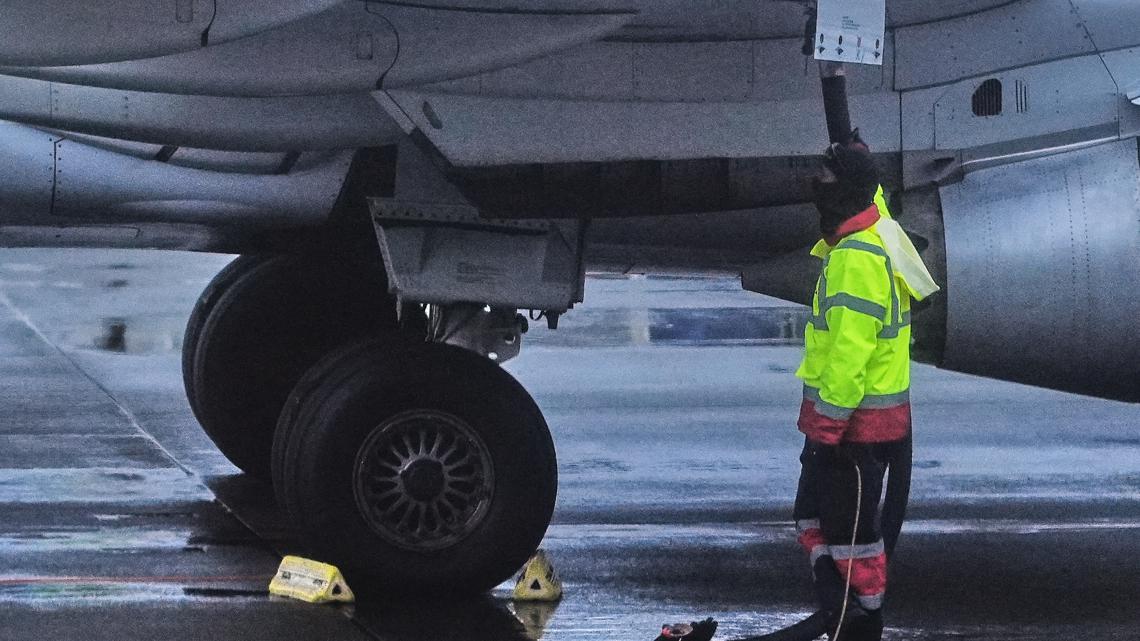
Jet fuel averaged $3.99/gal in the U.S. on Friday, up from $2.50/gal two weeks earlier as the Middle East war disrupted exports and effectively halted traffic through the Strait of Hormuz (≈20% of global oil flows). Fuel is ~20–25% of airline operating costs, and carriers including Cathay Pacific, Air France‑KLM (≈€50 on some long‑haul roundtrips), Air India (surcharges up to $50), Hong Kong Airlines and FlySafair have announced fare increases or fuel surcharges while U.S. carriers are more likely to fold costs into higher base fares. This is a sector-moving, volatile development that creates sustained margin pressure on airlines and raises the likelihood of route cuts, schedule changes and higher ancillary fees if elevated jet-fuel prices persist.
Airlines with a disproportionately large long‑haul international footprint will see margin pressure spike faster and for longer than network carriers focused on domestic short‑haul; long sectors are a high fixed‑fuel burn profile that magnifies per‑flown-hour cost moves and compresses unit revenue per seat more quickly. Rerouting and ATC constraints create a persistent one‑off fuel consumption wedge (higher block hours and irregular utilization) that will hit quarterly unit costs before airlines can fully reset schedules or fares. Refiners and players capturing the crack spread are the logical beneficiaries in the same window: if product differentials widen, incremental refinery cashflow can re-rate quickly while airlines lag on fare passthrough and capacity adjustments. The critical time bands are immediate operational (days–weeks of reroutes), tactical pricing (0–3 months as carriers reprice inventory and ancillary bundles), and structural (3–12 months as route networks and hedging policies adjust), with diplomatic de‑escalation or sudden demand destruction the main rapid reversals.
AI-powered research, real-time alerts, and portfolio analytics for institutional investors.
Overall Sentiment
mildly negative
Sentiment Score
-0.30
Ticker Sentiment
