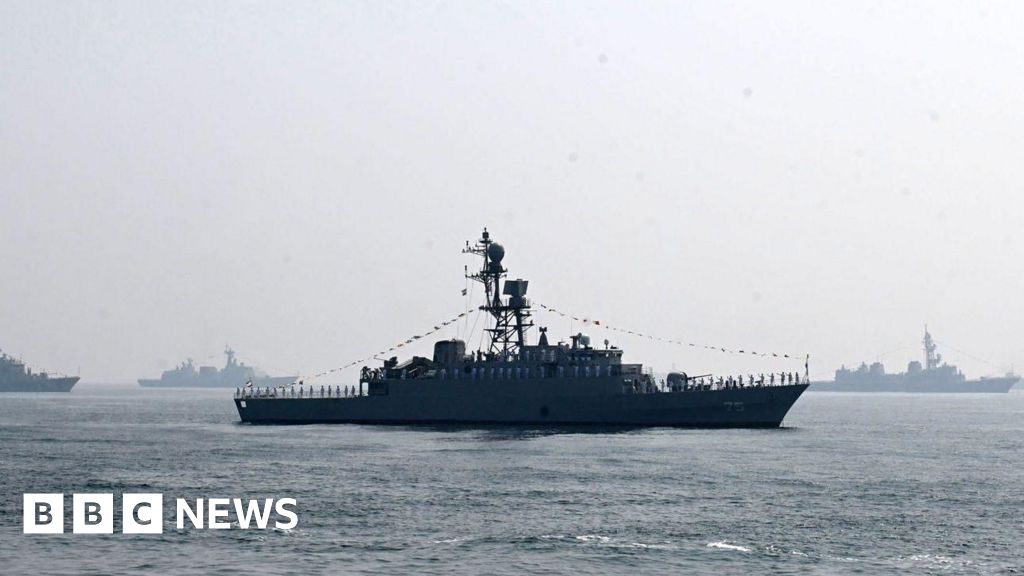
Iris Dena was torpedoed and sank on 4 March in international waters, killing at least 87 of roughly 130 crew; India had granted permission on 1 March for three Iranian ships to dock and Iris Lavan subsequently berthed in Kochi while Iris Bushehr received sanctuary in Sri Lanka. The attack—the first US submarine torpedo sinking since WWII and a clear widening of the US–Israel campaign—raises regional military risk and is likely to trigger risk-off flows, upward pressure on oil prices and safe‑haven assets. For portfolios, expect wider EM risk premia, potential short-term spikes in energy volatility and the need for tactical hedges (FX/eq protection) and selective exposure to defense and energy plays.
The tactical shock to undersea and regional naval risk will transmit into three measurable markets: defense procurement, maritime insurance/freight, and EM sovereign/peripheral risk. Expect governments within India's maritime arc to accelerate port hardening, ISR buys and anti-submarine capabilities — procurement cycles that typically convert into multi-year revenue ramps for prime contractors and satellite/ISR vendors within 6–24 months.
Maritime insurance and freight rates will reprice ahead of visible escalation: in prior localized naval contests, war-risk and hull & machinery premia rose 20–40% within weeks and took 3–6 months to equilibrate as shipowners rerouted and carriers reduced sailings. That mechanism lifts tanker/commodity shipping costs first, creating a transient upstream pass-through to oil and LNG prices over 0–90 days, with fading impact if commercial-routing alternatives and SPR releases are deployed.
Emerging market risk is asymmetric: countries hosting naval logistics or with tourist/port exposure face near-term FX and CDS widening, while regional defense-industrial complexes stand to gain. The key reversal catalyst is rapid diplomatic de-escalation or clear rules-of-engagement reestablished at sea; absent that, expect a 3–9 month period of elevated volatility and policy-driven procurement announcements.
The market may be overstating a permanent shock to global trade lanes — commercial avoidance typically compresses within a quarter if governments provide convoying or insurance backstops — but it is underpricing a 12–24 month procurement cycle that benefits select defense and ISR names materially.
AI-powered research, real-time alerts, and portfolio analytics for institutional investors.
Request DemoOverall Sentiment
strongly negative
Sentiment Score
-0.80
