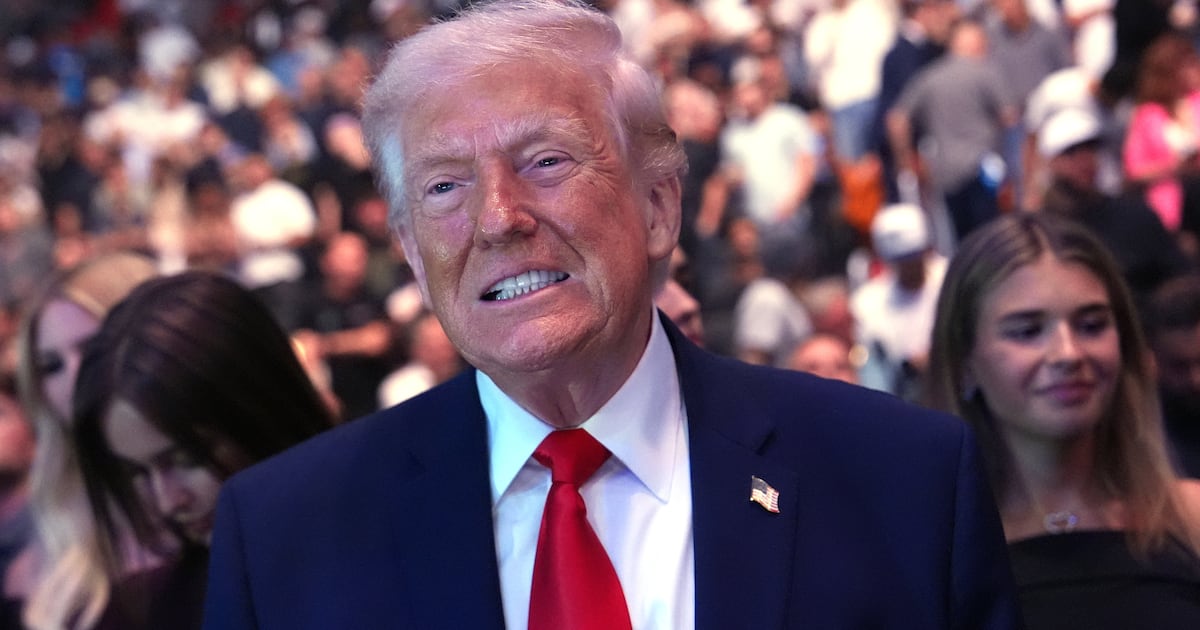
President Trump publicly distanced himself from Riley Gaines after criticism of his AI-generated Truth Social post depicting himself as Jesus Christ, then deleted the image and said he was "not a big fan" of Gaines. The article also highlights his broader clash with Pope Leo XIV over immigration, the Iran war, and Trump’s policies, but contains no direct corporate or market-moving financial developments. Overall impact is limited to political optics and social-media backlash.
The immediate market read is not about one personality clash; it is about the durability of the coalition that has been underwriting a large part of the post-election policy premium. When a high-visibility surrogate publicly distances herself from the brand, it signals softer discipline in the pro-administration influencer ecosystem, which can matter more for narrative-driven sectors than for fundamentals. The risk is not a direct earnings hit, but a higher probability of intra-right fragmentation that weakens message velocity on issues like education, sports policy, and media engagement.
The AI angle is more actionable. This is another reminder that synthetic-media incidents involving political figures can create brief volatility spikes in social platforms, content moderation names, and any company exposed to election-adjacent misinformation workflows. The second-order effect is that enterprises and campaigns may accelerate spending on provenance, watermarking, and monitoring tools, which is a small but durable budget line rather than a one-off headline trade.
From a governance perspective, the episode reinforces a premium on organizations that can absorb public reversals without operational drift. The same dynamic can pressure celebrity- or founder-led brands if they rely on ideology-driven customer loyalty: reputational whiplash tends to hurt engagement more than revenue at first, then shows up later in churn and advertiser caution. The contrarian view is that these conflicts often reset alliances quickly; unless there is a broader policy break, the market overestimates the persistence of the public feud and underestimates how fast the coalition reforms around shared incentives.
Near term, the main catalyst is follow-on commentary from other high-profile conservative voices or any additional AI-generated image controversy. If the story broadens, expect a few sessions of heightened volatility in media and social platforms; if it fades, the tradeable move is mostly in the implied-vol surface, not the cash equities. Over months, the more important question is whether these episodes push campaigns and institutions toward heavier spend on content verification and crisis-comms infrastructure.
AI-powered research, real-time alerts, and portfolio analytics for institutional investors.
Request TrialOverall Sentiment
neutral
Sentiment Score
-0.05
