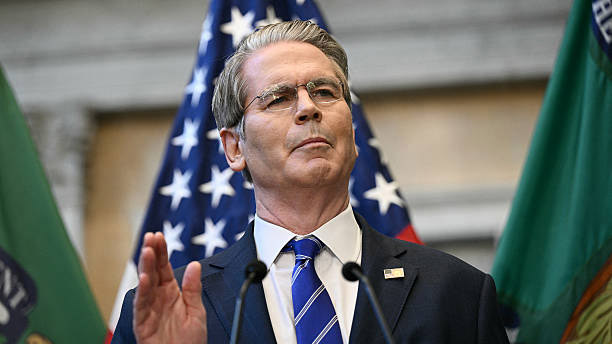
Treasury Secretary Scott Bessent stated the U.S. aims to assist, not harm, China, yet emphasized that the U.S. and its allies will prevent China from monopolizing the global rare earths supply. Bessent also indicated a potential delay in implementing additional 100% tariffs on China, with negotiations anticipated in the coming weeks ahead of a U.S.-China leadership meeting in South Korea, signaling a strategic balancing act in bilateral trade and resource control.
Treasury Secretary Scott Bessent articulated a nuanced U.S. stance on China, emphasizing a desire to assist rather than harm, while simultaneously asserting that the U.S. and its allies will prevent China from monopolizing the global rare earth supply. This dual approach signals a strategic balancing act, combining economic engagement with critical resource security. The potential delay in implementing additional 100% tariffs on China, ahead of forthcoming bilateral negotiations, contributes to a moderately positive market sentiment. The proposed tariff delay suggests a near-term de-escalation of trade tensions, offering a window for diplomatic resolution during the upcoming U.S.-China leadership meeting in South Korea. However, the explicit commitment to preventing China's rare earth monopoly underscores persistent geopolitical competition over critical raw materials and supply chain resilience. This highlights a long-term strategic objective for the U.S. and its allies. The focus on rare earths, essential for high-tech industries, indicates ongoing efforts to diversify supply chains away from single-country dominance, potentially driving investment into alternative extraction and processing capabilities. The overall market impact is assessed as moderate, reflecting both the positive signal from potential tariff delays and the underlying strategic competition over vital resources.
AI-powered research, real-time alerts, and portfolio analytics for institutional investors.
Request DemoOverall Sentiment
moderately positive
Sentiment Score
0.50
