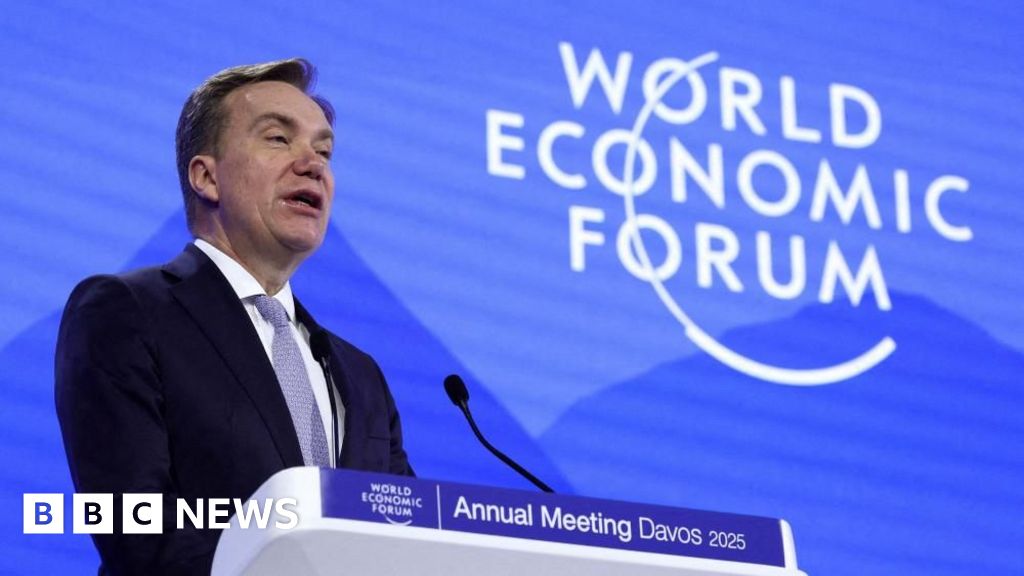
World Economic Forum president and CEO Borge Brende has resigned after an independent review into his contacts with Jeffrey Epstein; Brende acknowledged dining with Epstein three times between 2018 and 2019 and exchanging emails and texts but said he was unaware of Epstein’s past crimes. The review found no additional concerns beyond prior disclosures, and Alois Zwinggi will act as interim CEO while the board seeks a permanent successor; the episode poses reputational and governance-related distractions for the WEF ahead of Davos and has prompted wider political scrutiny in Norway, though it is unlikely to have material direct market impact.
Market structure: The immediate winner set is crisis/advisory and compliance providers (risk consultants, law firms, data vendors) who can reasonably increase billings and win short-term mandates; expect a 1–3% revenue tailwind for public peers (MMC, AON, FCN, TRI) over 3–12 months as boards refresh diligence. Losers are reputationally exposed networks and premium-event ecosystems (Davos hospitality, niche luxury services) — local booking/revenue near-term drop could be 5–15% for vendors tied to the Forum during the next event cycle, but systemic market impact is negligible.
Risk assessment: Tail risks include cascading disclosures that force multiple corporate board/CEO exits or class-action suits, which would increase legal/compliance spend and reduce high-level corporate travel for 6–18 months; probability low (<10%) but impact material for targeted sectors. Near term (days–weeks) expect reputational volatility and headlines; medium term (3–12 months) potential structural tightening of vetting/attendance policies; long term (12+ months) potential reduction in value of in-person elite networking, shifting spend to digital/third-party validation.
Trade implications: Construct small, idiosyncratic long positions in crisis/advisory and compliance data names: MMC, AON, FCN, TRI (tactical 1–3% net exposure each) funded by micro shorts in event/hospitality plays sensitive to Davos (Accor AC.PA, BKNG) around upcoming attendance announcements. Use options to express convexity: 3-month call spreads on MMC/FCN (buy ATM, sell +20% strike) sized 0.5–1% portfolio to capture re-rating; buy 2–3 month puts on AC.PA/BKNG if attendance declines >10% vs prior year.
Contrarian angles: The market is underpricing recurring demand for third‑party validation and advisory after high‑profile governance failures — a 12–24 month structural uplift in legal/compliance budgets (up 5–10% for affected corporates) is plausible. Reaction is not yet extreme; small, disciplined long positions in advisory/data firms with clear exposure to compliance workflows look asymmetric. Key unintended consequence: overzealous de‑platforming could hollow out formal forums and redistribute policy influence to less transparent networks — monitor ESG/coordination-linked flows for knock‑on trades.
AI-powered research, real-time alerts, and portfolio analytics for institutional investors.
Request TrialOverall Sentiment
mildly negative
Sentiment Score
-0.25
