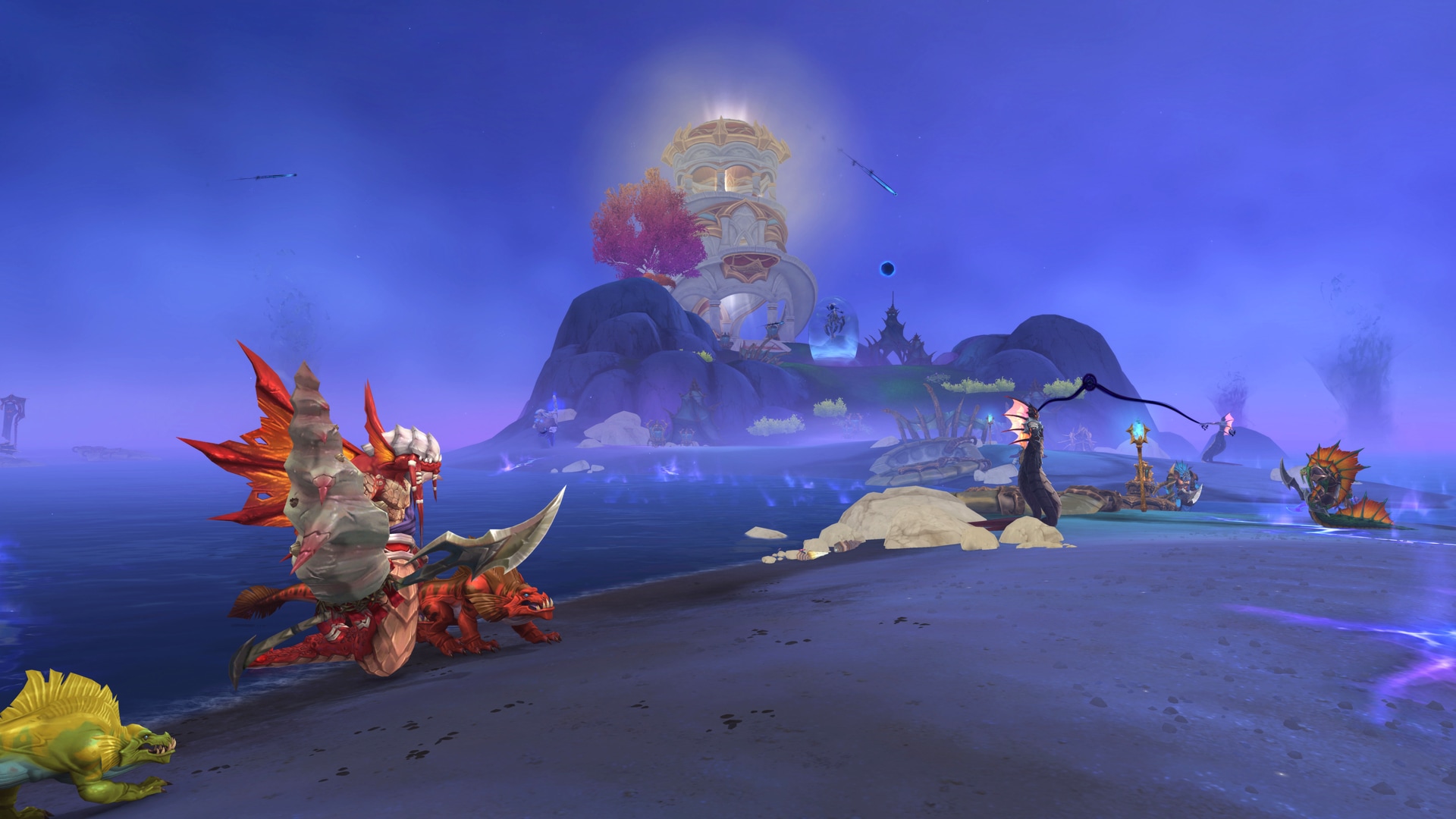
Blizzard's 12.0.5 content update for World of Warcraft: Midnight adds new gameplay systems, activities, rewards, and class reworks, including Void Assaults, Ritual Sites, Voidforge crafting, Decor Duels, Abyss Anglers, and multiple Mythic+ and housing improvements. The patch also delivers broad class tuning across Death Knight, Demon Hunter, Druid, Evoker, Hunter, Mage, Monk, Paladin, Priest, Rogue, Shaman, Warlock, and Warrior, alongside UI and transmog enhancements. The update is largely a routine live-service content release with modestly positive engagement implications but limited direct market impact.
This update is less about a single feature bump and more about a deliberate conversion of engagement into recurring monetization. The strongest second-order effect is higher endgame retention: deterministic gear targeting, capped-but-expanding progression currency, and weapon/trinket upgrade paths should increase weekly return rates and reduce alt friction, which typically lifts subscription durability more than cosmetic launches alone. That also raises the value of late-season participation, compressing the usual post-launch decay curve and making the title less seasonal in revenue profile.
The housing and social-event layer is the quieter upside. By making decor discovery, inspection, and catalog sharing much easier, the game lowers the transaction cost of aesthetic spending and community showcase behavior. That should improve conversion on cosmetic catalog items and create a stronger network effect around guild neighborhoods; once players use housing as a social graph, churn becomes more expensive because the product is no longer just progression-driven. The risk is that this only matters if housing has sufficient breadth of inventory and if the UI improvements translate into actual paid or earned decor demand rather than just convenience.
The combat-system changes are a mixed bag for balance volatility. Broad class tuning plus more deterministic gearing usually favors high-skill, organized players in the near term and increases the ceiling for competitive PvE/PvP content, but it also raises the probability of class-spec whiplash over the next 2-6 weeks as the meta settles. The contrarian concern is that too much power progression can backload accomplishment: if players feel they can target everything efficiently, rare-drop excitement and grind dopamine may weaken, partially offsetting the retention benefit.
Net: this is structurally bullish for engagement, especially midcore and completionist cohorts, but the market should watch for an initial spike in time-spent followed by a normalization once the new loops become optimized. The highest-risk scenario is balance dissatisfaction or economy inflation if currency sinks and upgrade pacing are miscalibrated, which could show up within one patch cycle rather than over a full expansion.
AI-powered research, real-time alerts, and portfolio analytics for institutional investors.
Request TrialOverall Sentiment
mildly positive
Sentiment Score
0.20
