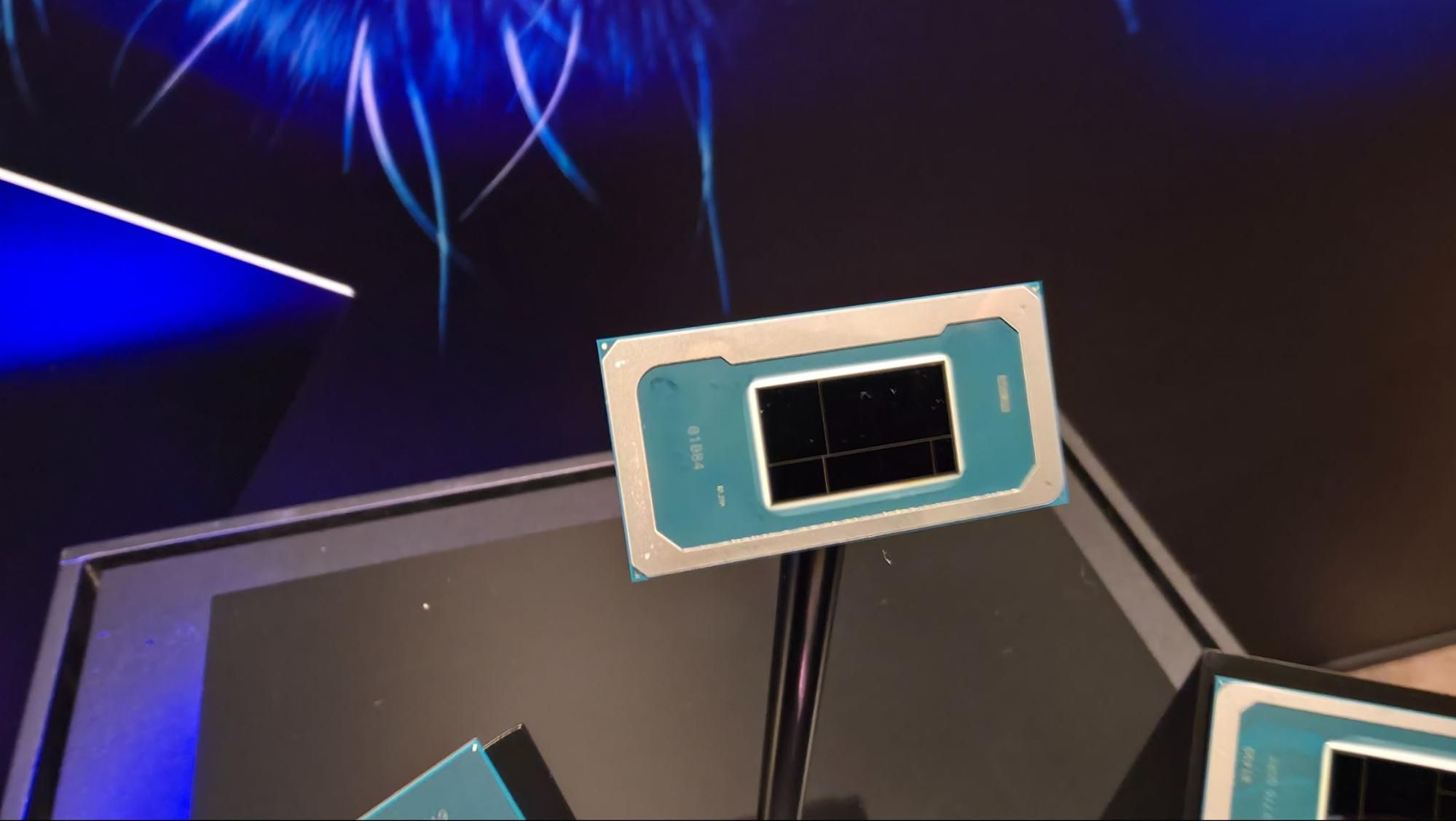
Intel announced 14 Core Ultra Series 3 “Panther Lake” SKUs built on its new 18A node (GAA + PowerVia) at CES 2026, including three X-series parts such as the Core Ultra X9 388H with an Arc B390 iGPU (12 Xe3 cores). The company claims major performance uplifts — up to 76% better gaming vs. Core Ultra 9 285H and up to 60% higher multi-threaded Cinebench performance vs. 288V at 25W — plus NPU 5 (up to 50 TOPS), LPDDR5x-9600 support and configurable thermal profiles (25W base / 65W turbo, OEM option for 45W / 80W). Preorders start Jan 6 with global availability from Jan 27 through H1 2026; investors should note these are vendor-provided benchmarks and independent validation will be needed before revising company or sector forecasts materially.
Market structure: Intel (INTC) is positioned to win incremental share in the entry-level/gaming laptop segment where integrated GPUs displace low-end discrete cards (RTX 4050-class). Immediate winners: Intel, LPDDR5x memory suppliers, and OEMs that adopt X-series (e.g., DELL). Losers: AMD’s mobile GPU competitiveness and lower-end Nvidia SKU demand could soften, pressuring pricing in the $200–$400 dGPU bucket and reducing attach rates for discrete GPUs over 6–12 months.
Risk assessment: Key tail risks are 18A yield shortfalls or independent benchmarks disproving Intel’s 76% claim — either would reprice INTC down by double digits within weeks. Hidden dependency: performance is highly sensitive to LPDDR5x-9600 adoption and OEM thermal/TDP choices; constrained LPDDR5x supply or OEM cost-cutting would materially reduce realized performance. Catalysts: Jan 6 preorder data, Jan 27 general availability, first independent reviews in 2–6 weeks, and OEM pricing announcements in Q1 FY26.
Trade implications: Tactical longs on INTC are justified if independent benchmarks within 3–4 weeks confirm >30% of Intel’s claimed gaming uplift at comparable TDPs; otherwise reduce. Consider relative-value short exposure to AMD (mobile APU sensitivity) over next 3–6 months. Watch options IV: buy defined-risk INTC call spreads into the GA window and buy AMD put spreads timed to post-CES quarter guidance to asymmetrically capture downside.
Contrarian angles: Consensus may overstate displacement of discrete GPUs — high-end gaming and creator workloads still favor dGPUs, capping long-term pricing power for Intel’s iGPU. Historical parallels: Intel’s prior iGPU pushes (Iris Xe) improved OEM leverage but didn’t decimate AMD/NVDA; similar modest share shifts are more likely than a platform revolution. Unintended consequence: OEMs might premium-price X-series laptops, limiting unit share gains despite performance parity.
AI-powered research, real-time alerts, and portfolio analytics for institutional investors.
Request DemoOverall Sentiment
moderately positive
Sentiment Score
0.35
Ticker Sentiment
