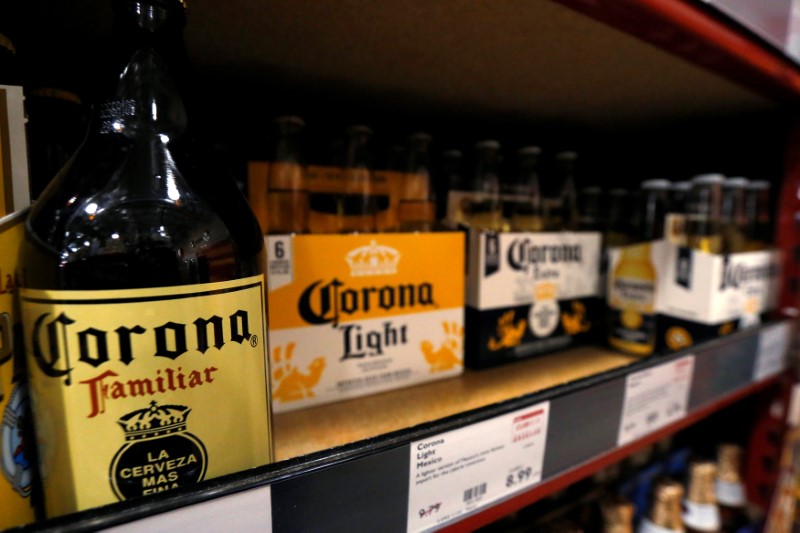
Constellation Brands guided fiscal 2027 comparable EPS of $11.20–$11.90 versus Wall Street consensus of $12.44, prompting a ~1.2% premarket dip. Q4 net sales fell 11% to $1.92B but topped estimates of $1.84B; beer segment sales were up ~1% with shipments +1.1%, and Q4 EPS came in at $1.90 versus $1.68 expected. CEO Bill Newlands will retire next week and Nicholas Fink is named CEO effective April 13, 2026. Analysts called the guidance conservative and Bank of America reiterated an Underperform, signaling downside risk to the stock despite mixed quarter results.
This is a classic guidance-driven re-rating where the market will punish visibility risk more than near-term operating performance; the biggest immediate transmission is multiple compression rather than margin shock. Expect 4–12% downside in the next 1–3 months if the narrative of conservatism sticks, amplified by quants and volatility-targeted flows that rotate out of recently outperforming names.
Secondary winners are brands and distributors with cleaner volume mix and better channel control — companies that can protect gross margins via promotional discipline or faster SKU rationalization. Conversely, suppliers sensitive to SKU churn (packaging, seasonal hop contracts, secondary logistics) face lumpy demand; near-term order smoothing could depress vendor revenues for a quarter.
Key catalysts and tail risks are asymmetric: downside risks crystallize quickly from weak consumer confidence prints or a surprise commodity/tax shock, while upside reversal needs tangible evidence — either a demonstrable pricing/mix improvement or clear strategic initiatives from incoming management within 60–120 days. Activist interest or an unexpected capital allocation shift (buybacks/M&A) would materially re-rate the equity and compress the perceived risk premium.
Tactically, this is a time to express views with defined-risk instruments and pairs rather than outright directional exposure. Use event windows (next 90–180 days) around earnings, first-90-day management updates, and key macro prints to time entries and limit gamma/time decay drag on positions.
AI-powered research, real-time alerts, and portfolio analytics for institutional investors.
Overall Sentiment
mildly negative
Sentiment Score
-0.25
Ticker Sentiment
