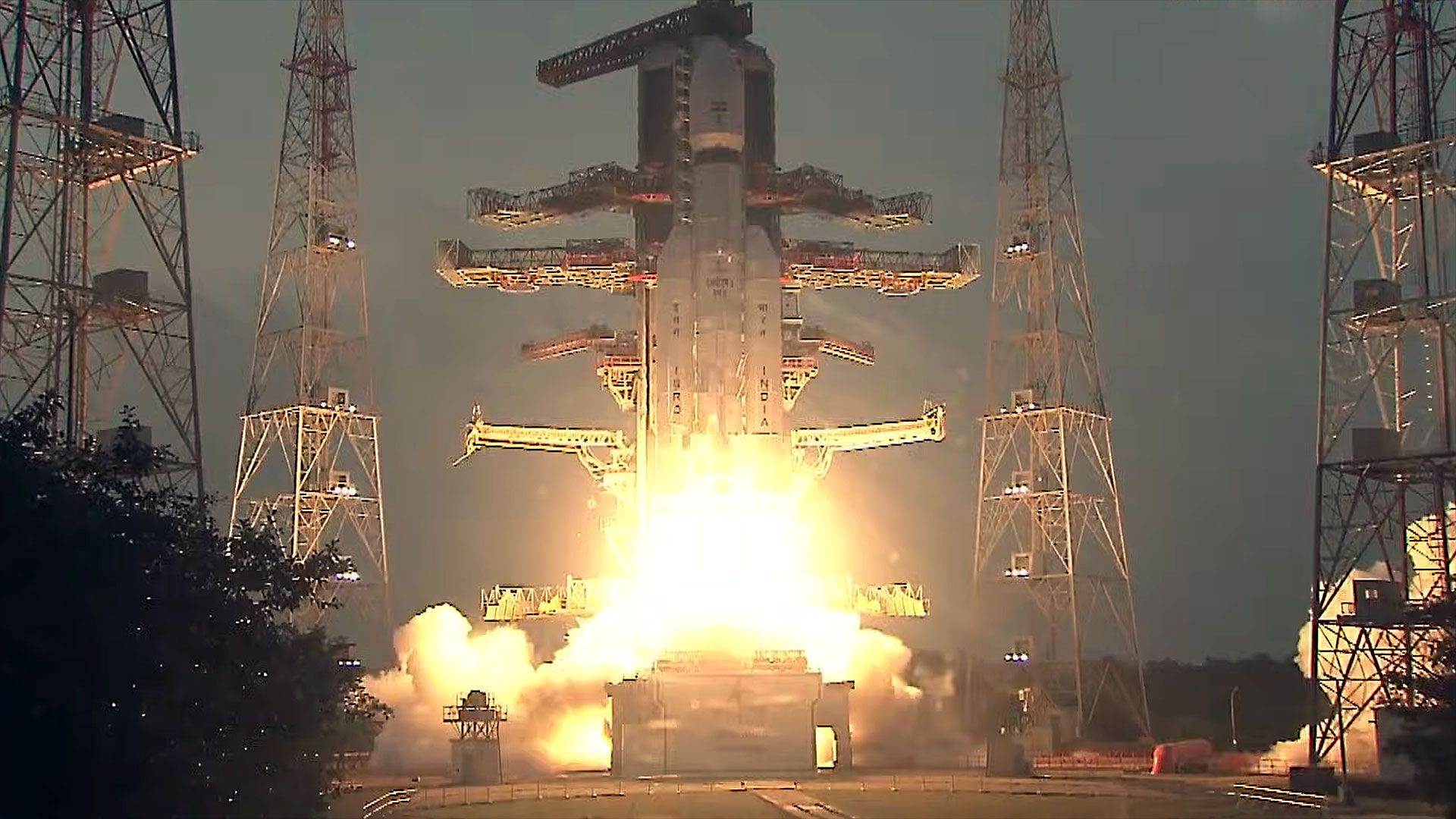
India successfully launched its CMS-03 military communications satellite, also known as GSAT-7R, using the powerful LVM3 rocket. This strategic deployment is designed to significantly enhance secure, multi-band communications for the Indian Navy's blue-water operations, providing real-time communication for naval operations, air defense, and strategic command control across a wide oceanic and terrestrial region. The new satellite strengthens India's defense capabilities and strategic communication infrastructure, replacing the older GSAT-7.
India successfully launched its CMS-03 military communications satellite, also known as GSAT-7R, on November 2nd using the powerful LVM3 rocket. This 9,700-pound spacecraft, the heaviest communications satellite ever launched to Geostationary Transfer Orbit (GTO) from Indian soil, will significantly enhance secure, multi-band communications for the Indian Navy. This strategic deployment marks a substantial upgrade, reinforcing India's communication infrastructure.
The CMS-03 is specifically designed to provide real-time communication for naval operations, air defense, and strategic command control across wide oceanic and terrestrial regions, directly supporting the Navy's growing blue-water operations. Its successful placement into geostationary orbit ensures continuous coverage over a specific Earth patch, a critical feature for military and communications craft, effectively replacing the older GSAT-7.
This successful launch, the eighth overall for the LVM3 rocket, underscores India's advancing space capabilities and commitment to national defense. The LVM3's proven reliability, following its successful Chandrayaan-3 mission, highlights India's technological prowess in developing and deploying critical space assets.
AI-powered research, real-time alerts, and portfolio analytics for institutional investors.
Request DemoOverall Sentiment
strongly positive
Sentiment Score
0.65
