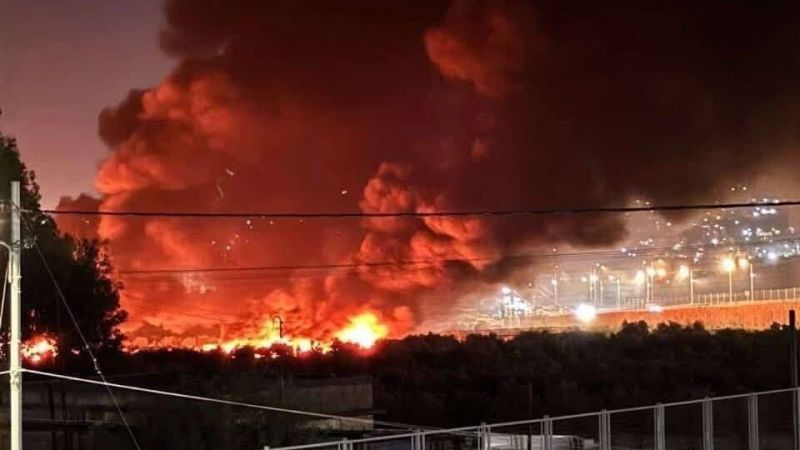
Militant Israeli settlers torched a vehicle scrapyard in Huwara in the northern West Bank, damaging or burning an estimated 150 cars, while firefighters extinguished large fires and the IDF reported no injuries or suspects found. Prime Minister Benjamin Netanyahu convened a security meeting on rising settler violence — which included recent arson rounds and past large-scale attacks in Huwara — and faces domestic pressure amid policy shifts such as Defense Minister Israel Katz’s move to end administrative detention for settlers. The incident underscores escalating local security risks and political tensions that could weigh on investor sentiment regarding regional stability, though it is unlikely to produce immediate, material market moves.
Market structure: The immediate winners are defense and security suppliers with Israel exposure (consider ESLT, LMT, RTX) as marginal demand for equipment and cybersecurity rises; losers are local insurers, auto salvage/repair businesses and small-cap Israeli domestic services. Pricing power shifts toward global defense primes (expect 1–3% revenue tailwind in next 12 months if procurement accelerates) while tourism/airlines face localized revenue hits of 2–8% seasonally. Cross-asset: expect risk-off flows—USD strength vs ILS (ILS could weaken 1–3% intra-month), modest rise in gold (+1–2%) and regional bond spreads widening 5–25bps if escalation persists beyond 2–4 weeks.
Risk assessment: Tail risks include rapid spillover to Gaza or Lebanon (low-probability ~5–15% in next 3 months but high-impact → Israeli 5y yields +30–75bps, oil +$3–7/bbl) and punitive international measures affecting defense exports. Immediate (days): volatility spikes and FX moves; short-term (weeks): tourism and retail earnings hit; long-term (quarters): policy/legal shifts could alter domestic investment climate and bank NPAs. Hidden dependencies: coalition politics determine rules of engagement and administrative-detention policy — one political trigger can shift markets quickly. Catalysts to watch: major cross-border military incident, Knesset votes on settler-related legislation, US diplomatic statements within 0–30 days.
Trade implications: Tactical longs: 1–2% long in ESLT (NASDAQ:ESLT) and 1% in LMT (NYSE:LMT) via 3–6 month call spreads to limit carry; tactical shorts: 1% underweight in Israeli tourism exposure (El Al, TASE:ELAL) and small-cap consumer discretionary ETFs in Israel for 1–3 months. Pair trade: long ESLT +1% / short ELAL -1% to capture defense upside vs travel downside. Options: buy 3-month call spreads on LMT (strike ~5–8% OTM) and 1–2% position in GLD calls (2–3 month) if FX/bond signals worsen. Rotate +2–4% to defense/cybersecurity and -2–4% from Israel domestic consumer/airline exposure, enter within 1–4 weeks; trim/exit if no escalation after 8–12 weeks.
Contrarian angles: Consensus understates policy risk transmission to corporates — some Israeli exporters may see USD revenue boost if ILS weakens, creating offsetting winners (export-heavy tech). Reaction may be overdone in airlines/tourism priced for prolonged collapse; historical parallels (localized arson/settler unrest 2015–2018) produced sub-3% market moves and recovery within 2–3 months. Unintended consequence: large defense allocations could attract regulatory scrutiny or slower contract awards if international pressure rises, so size positions conservatively (1–2% each) and time exits to political calendar (Knesset votes, US State Dept actions within 30–90 days).
AI-powered research, real-time alerts, and portfolio analytics for institutional investors.
Request DemoOverall Sentiment
mildly negative
Sentiment Score
-0.25
