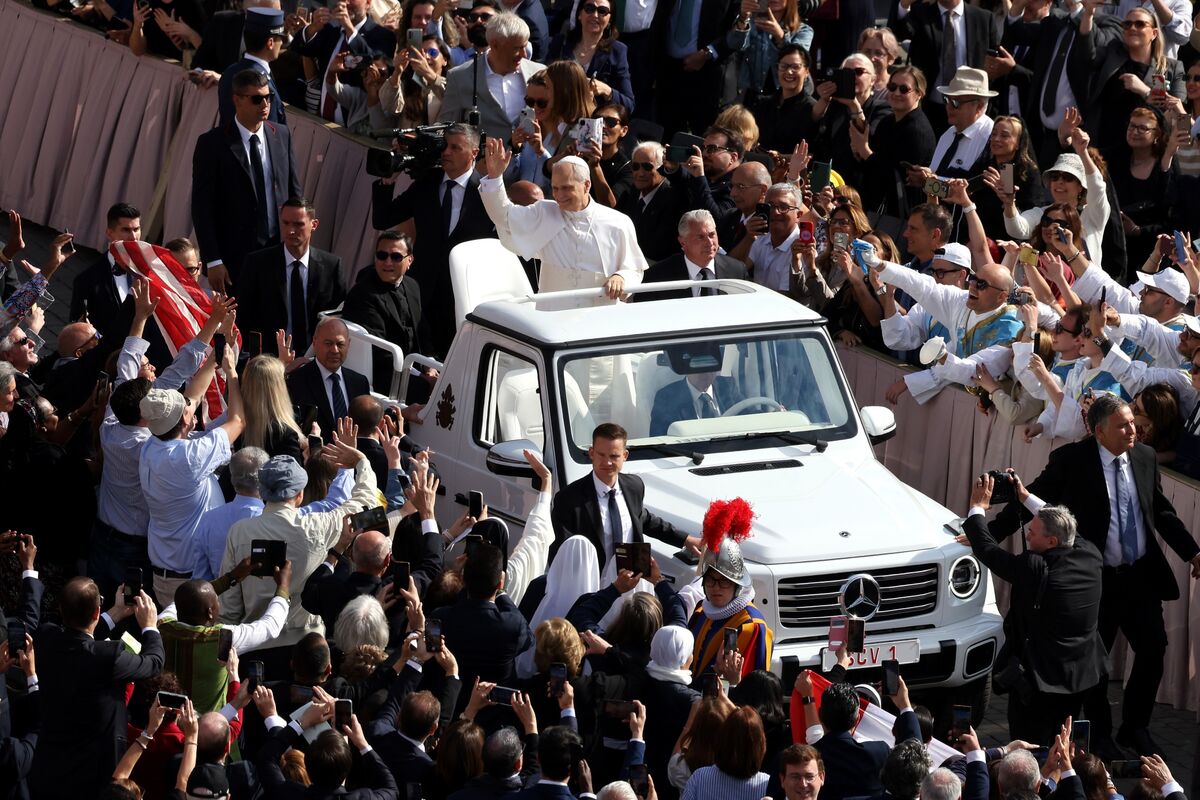
Pope Leo XIV warned world leaders not to use wars as a political tactic to distract voters from domestic problems and urged Catholics not to accept claims that war is inevitable. The comments are broadly political and moral in nature, with no direct market, policy, or corporate implications. Market impact is likely negligible.
The market implication is not about immediate asset repricing so much as signaling. When a high-profile moral authority explicitly frames external conflict as a domestic political tool, it raises the reputational cost of escalation for incumbents who are already under pressure at home; that is most relevant in elections where leaders need a unifying external narrative. The second-order effect is a slightly lower probability of fast-moving escalation around already fragile flashpoints, which matters more for vol-sensitive assets than for outright directional positioning.
The biggest beneficiary is the “risk-premium compression” trade: energy, defense, shipping insurance, and EM FX all carry a small embedded geopolitics bid that can unwind if rhetoric dampens headline intensity. Over the next few days, this is mainly a sentiment filter; over months, it could matter if it shapes voter appetite for intervention or prolongs restraint before elections. The loser set is any policy-dependent sector that profits from prolonged conflict framing, especially defense contractors and cyber names that tend to outperform on sustained threat escalation.
The contrarian view is that moral messaging rarely changes regime incentives when leaders are under domestic stress; it can even harden behavior if politicians believe external conflict is their best path to retain power. So the right read is not “peace dividend,” but “lower odds of surprise escalation at the margin.” That makes the opportunity more tactical than structural: fade overreaction in war-sensitive hedges if no concrete policy follow-through appears within 1-2 weeks, but keep convexity against a true shock because the tail risk remains asymmetrical.
In practice, this is a small but useful cue to lean into short-duration volatility selling in geopolitically sensitive baskets, while keeping disaster hedges intact. The key catalyst is not the statement itself, but whether domestic polling or cabinet rhetoric in exposed countries shifts toward de-escalation over the next 30-60 days.
AI-powered research, real-time alerts, and portfolio analytics for institutional investors.
Request DemoOverall Sentiment
neutral
Sentiment Score
-0.05
