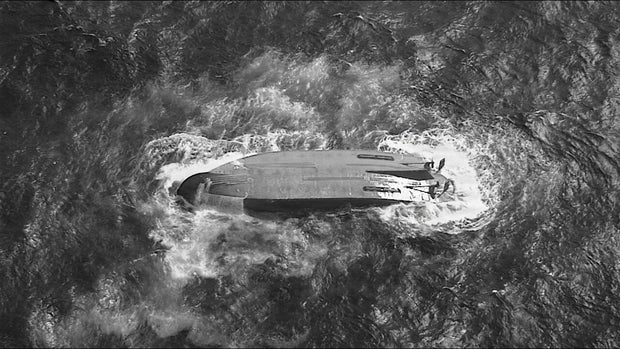
A U.S.-flagged cargo ship, the 145-foot Mariana, was found overturned near Saipan after Typhoon Sinlaku, with 6 crew still missing. The vessel lost its starboard engine before contact was lost Thursday, and search teams from the U.S., Guam, Japan and New Zealand have covered more than 75,000 square nautical miles. The event highlights severe storm disruption in the Northern Mariana Islands, but the direct market impact appears limited.
This is less a single-asset story than a stress test for island logistics and maritime rescue capacity. The immediate economic hit is concentrated: a single U.S.-flagged cargo hull gone offline is trivial in global freight terms, but the operational lesson is that when a storm knocks out propulsion in a remote corridor, response time becomes the binding constraint, not asset value. That creates a small but real premium for operators with redundant routing, tug access, satellite comms, and higher-spec vessel insurance; the losers are thinly capitalized regional shippers and any operator relying on just-in-time replenishment to Pacific territories.
The second-order risk is to procurement and inventory buffers in Guam, CNMI, and nearby defense-linked supply chains. Even if the vessel is eventually recovered, the bigger issue is that storm windows in this part of the Pacific can create 1-3 week disruptions in fuel, building materials, and food resupply, which tends to flow through to expedited airfreight, higher port congestion, and temporary price spikes. On the defense side, the event reinforces the value of dual-use logistics assets and weather-hardened infrastructure, supporting contractors exposed to resilient communications, marine monitoring, and rapid repair.
The contrarian view is that the market may overestimate the duration of the disruption while underestimating the insurance and compliance tail. Search-and-rescue costs and hull-loss headlines are immediate, but the deeper P&L impact often shows up later through higher marine premiums, stricter routing requirements, and tougher underwriting on Pacific crossings after a high-profile casualty. If this becomes part of a broader pattern of storm-intensified incidents, the investment angle shifts from a one-off disaster trade to a multi-year repricing of logistics resiliency and coastal infrastructure capex.
AI-powered research, real-time alerts, and portfolio analytics for institutional investors.
Request DemoOverall Sentiment
moderately negative
Sentiment Score
-0.40
