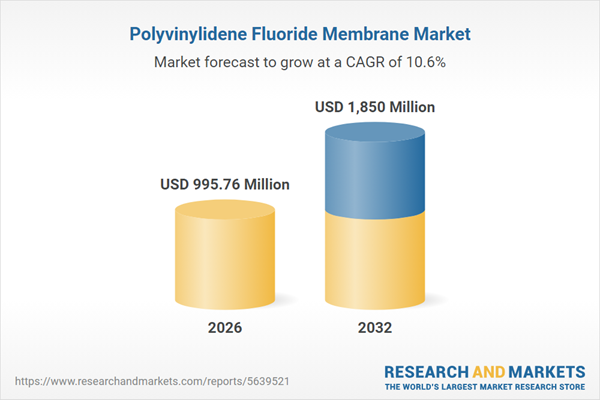
ResearchAndMarkets added a report on the global PVDF (polyvinylidene fluoride) membrane market covering 2026-2032. The article highlights PVDF membranes’ improved durability and performance resilience for filtration and separation workflows, but provides no quantified financial impact or market-moving data.
This is more a thematic breadcrumb than an investable catalyst. The market is effectively being handed a long-duration demand story for specialty membranes, but public equities only care once that story shows up in qualification wins, backlog, or mix—not in a published forecast. The near-term risk is that investors confuse TAM expansion with revenue acceleration and overpay for anything labeled "advanced filtration" before the P&L can reflect it.
The real second-order winner set is not the end-user industries; it’s the incumbents with installed bases, validation credentials, and consumables pull-through. In membranes, switching costs are high once a process is qualified, so the economic moat lives in reliability and regulatory acceptance rather than raw polymer chemistry. That favors large platform names like DHR and TMO over smaller niche suppliers, while low-end entrants risk margin compression if PVDF capacity becomes more commoditized.
Contrarian view: the market may be underestimating how slow this monetizes. In bioprocessing and industrial separation, conversion cycles can run 6-18 months; in battery-adjacent uses, price sensitivity is higher and alternative materials can cap pricing power. The thesis is falsified if the next two quarters show no uptick in filtration-related bookings, or if resin input costs fall faster than membrane ASPs, which would signal a more competitive market than the report implies.
AI-powered research, real-time alerts, and portfolio analytics for institutional investors.
Request DemoOverall Sentiment
neutral
Sentiment Score
0.08
