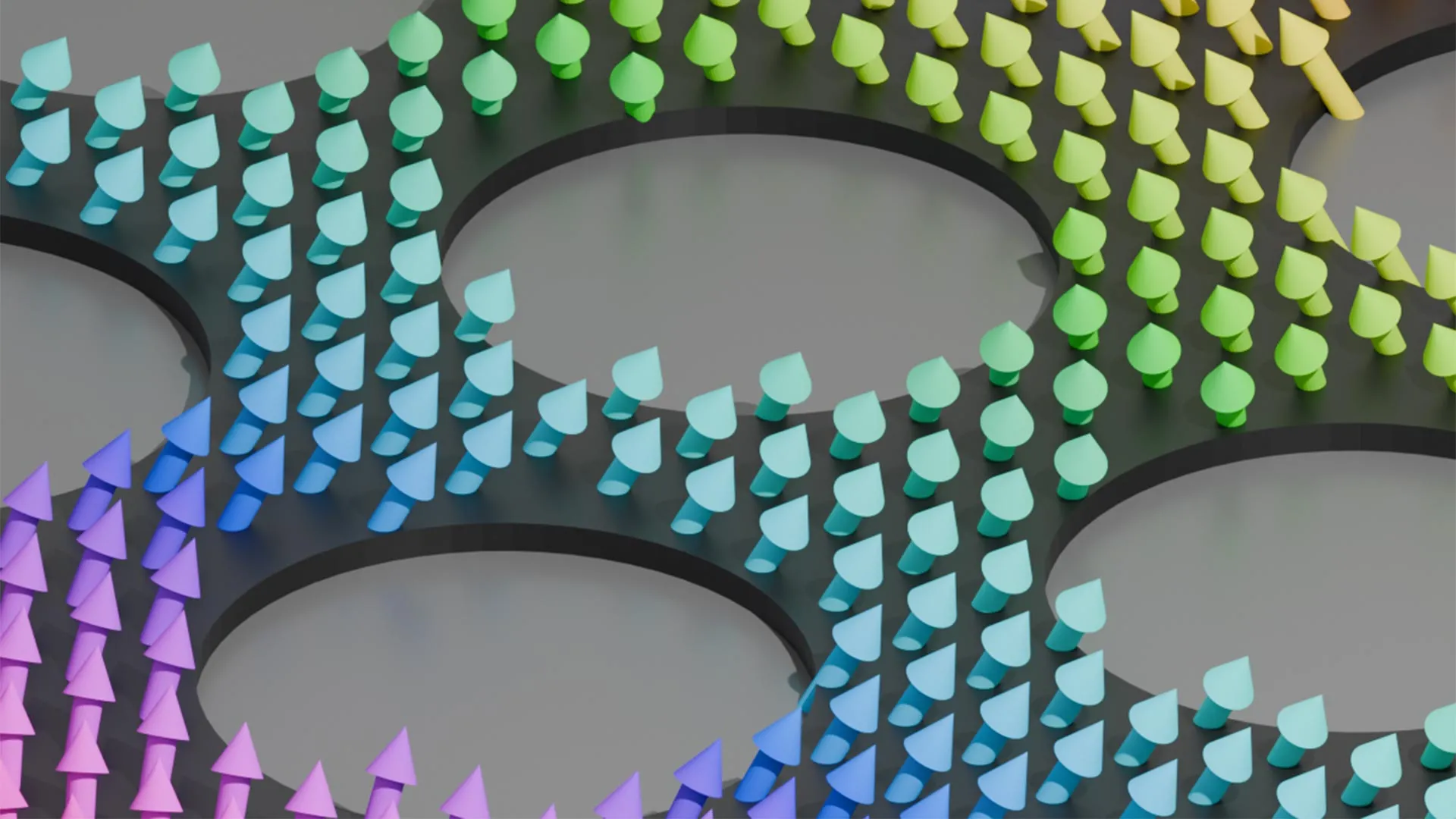
Researchers at the University of Illinois demonstrated a hexagonally patterned magnonic crystal that produces nine distinct spin-wave energy bands and mathematically emulates graphene behavior (Physical Review X; DOI: 10.1103/t7tm-nxyl). The team says the platform could enable micrometer-scale miniaturization of microwave components such as nonreciprocal circulators and has filed a patent on device concepts; commercialization timing and near-term revenue impact are uncertain. The study was supported by the NSF-funded Illinois Materials Research Science and Engineering Center.
This research creates a new, defensible wedge in the RF/microwave value chain: a patentable materials + geometry solution that can shrink or replace bulky non‑reciprocal components used today in niche but high‑margin applications (defense, satellite comms, base‑station radios). Adoption will be governed less by the physics and more by three engineering choke points — fabrication yield at sub‑micron patterned films, thermal and power handling in packaged modules, and integration with existing semiconductor RF front ends — each of which maps to distinct supplier winners (advanced lithography/etch vendors, thin‑film toolmakers, RF module integrators).
Time horizons matter: expect 12–36 months of device prototyping and qualification by specialist OEMs, 3–6 years for scaled production in telecom and defense supply chains, and 5–10 years before handset/consumer substitution could be realistic if cost curves improve. Two second‑order effects are notable: (1) demand for bespoke patterning equipment and wafer‑level packaging will increase before demand for the end device — a lead for capital equipment names; (2) incumbents that rely on bulk ferrites will see pressure to either buy the IP or co‑develop, accelerating M&A in small RF component manufacturers.
Key downside paths that could derail commercialization are rapid progress on CMOS‑based non‑reciprocal techniques, inferior real‑world insertion loss/linearity relative to incumbent ferrites, or failure to secure defensible licensing corridors (patent breadth). Those risks compress the window for monetization and push value toward acquirers with integrated systems businesses (who can internalize fabrication risk) rather than pure‑play materials suppliers.
AI-powered research, real-time alerts, and portfolio analytics for institutional investors.
Request DemoOverall Sentiment
mildly positive
Sentiment Score
0.20
