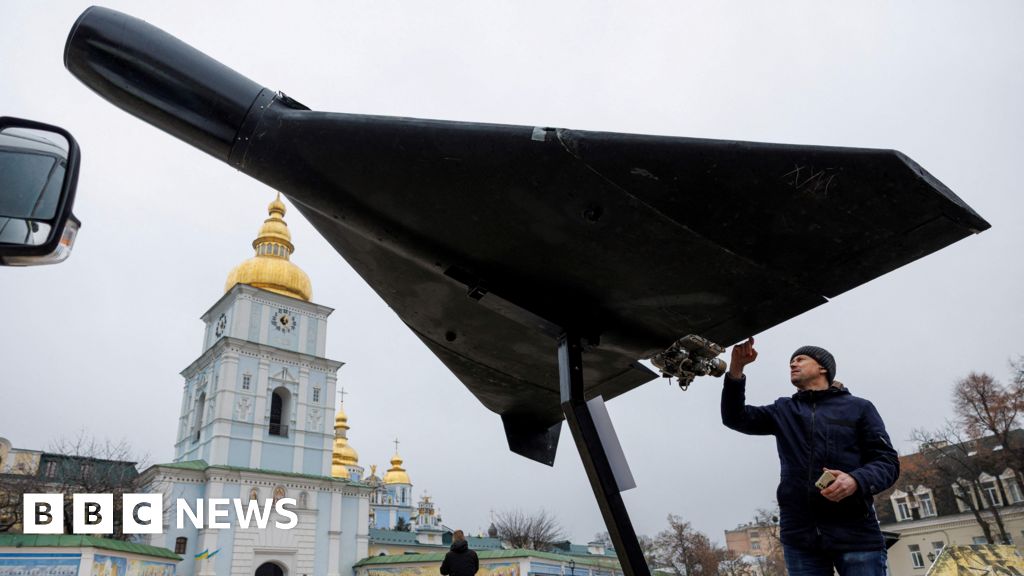
Ukrainian President Volodymyr Zelensky warned that a US-Iran military escalation could divert Western air-defence interceptors (eg. Patriot missiles) to the Middle East, creating global shortages and higher costs that would hamper Ukraine’s ability to defend its airspace. The piece flags secondary market implications: Iran’s supply of Shahed drones to Russia and potential disruptions to shipping through the Strait of Hormuz could lift oil prices and financially bolster Russia, while shifting allied focus away from Ukraine — a development that could influence defense suppliers, energy markets and geopolitical risk premia for investors.
Market structure: Immediate winners are Western defense primes with Patriot/PAC-3 and air‑defence supply chains (Lockheed LMT, Raytheon/RTX, General Dynamics GD) and integrated energy majors (XOM, CVX) if oil spikes; losers include airlines (JETS), regional carriers and emergent-market exporters dependent on Gulf trade. Supply/demand: interceptor missiles are a low‑volume, long‑lead product — a 3–12 month production bottleneck can raise prices ~20–50% for replenishment contracts; drones shift demand to asymmetric air‑defense and EW systems. Cross‑asset: expect near‑term USD strength, higher Brent/WTI, elevated VIX and safe‑haven flows into US Treasuries and gold, pressuring cyclical equities and EM FX.
Risk assessment: Tail risks include a sustained Strait of Hormuz disruption (Brent +$20–40 in 1–3 months) or direct US‑Russia friction; low probability but high impact on oil, shipping and insurance rates. Time horizons: days (risk‑off, flights to TLT/GLD), weeks–months (oil-driven earnings revisions and defense order announcements), quarters (capex and manufacturing scale‑ups 6–18 months). Hidden dependencies: US stockpile drawdown, Congressional approvals, and subcontractor capacity (precision seekers, semiconductors) constrain delivery. Catalysts: strikes on shipping lanes, bipartisan US defense supplemental votes, or public inventory reports.
Trade implications: Favor 1–3% portfolio allocations to LMT and RTX (split) and 2–4% to XOM/CVX via equities or 3‑month Brent call spreads; short JETS 1–2% as fuel costs rise. Options: buy 3‑6 month call spreads on RTX (buy ATM, sell +10% strike) to cap cost, and buy 1–3 month Brent/USO calls if Brent crosses $85. Rotate out of EM commodity importers and travel/leisure into defense, energy and gold; enter incrementally on pullbacks of 5–10% and scale to target weights over 2–6 weeks.
Contrarian angles: Consensus underestimates Ukraine’s persistent demand for interceptors even if attention shifts — separate procurement buckets mean US may prioritize replenishment over new Gulf commitments, creating a multi‑quarter revenue tail for defense contractors. The market may overprice immediate oil upside given strategic reserves and rerouted tanker flows; if Brent fails to clear $95 for 30 days, energy equities have limited follow‑through. Historical parallels (2019 tanker shocks) show shipping insurance and rerouting mute price spikes after ~6–12 weeks; trades should therefore be time‑boxed and volatility‑hedged.
AI-powered research, real-time alerts, and portfolio analytics for institutional investors.
Request TrialOverall Sentiment
moderately negative
Sentiment Score
-0.50
