

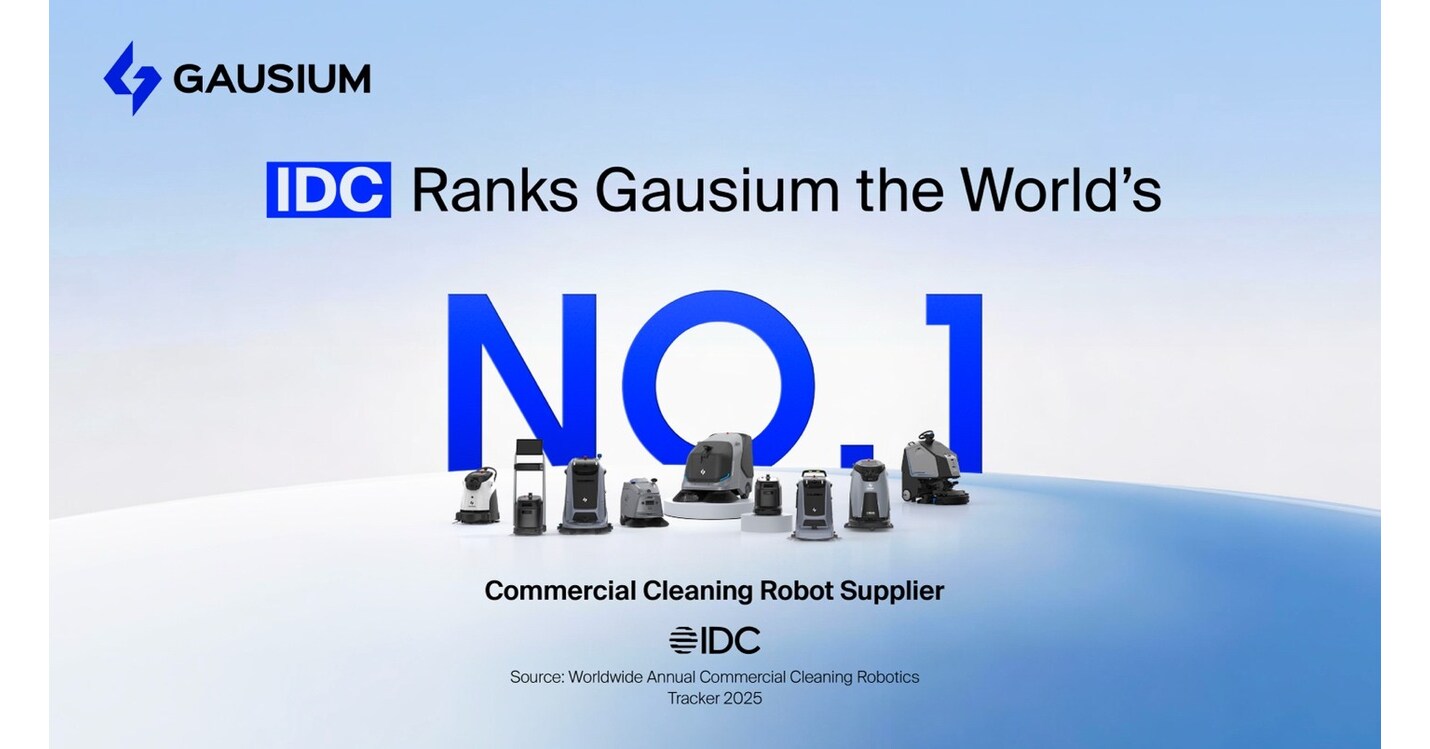
IDC sitúa el mercado global de robots de limpieza comerciales en $760M, un +48,5% interanual, y Gausium mantiene el #1 mundial tanto por ingresos como por volumen de envíos. La compañía también lidera por región y por principales segmentos de aplicación, respaldada por su servicio a +6.500 clientes en >70 países (incluyendo Heathrow/Changi/Doha y cadenas como Carrefour/Auchan/Rossmann). El mensaje apunta a una transición de automatización de una sola máquina a “inteligencia de procesos” con robots más integrados y autogestionados.
The important signal is not the ranking itself but the transition from proof-of-concept to repeatable fleet deployment. If this category is entering standardization, the economic moat shifts from unit economics on the robot to recurring software, fleet management, and service attach rates; that is where gross margins and switching costs can expand over the next 6-18 months. The fastest adopters should be high-labor, multi-site operators, while single-site retail is more likely to pilot than scale, so the market opportunity is probably more back-end logistics and airports than front-of-house stores.
For customers, the near-term effect is incremental opex relief rather than a step-change in earnings. That matters most for businesses already fighting wage inflation and service consistency, but the benefit is likely too small to move near-term guidance at a company like KO; for a retailer such as CRRFY, it is a more plausible margin tailwind if management can show labor redeployment rather than just capex substitution. The second-order winner is whoever captures the installed base with software and maintenance, not the customer buying the hardware.
Contrarian view: this may be a good industry story but a weak stock catalyst. IDC-style leadership can overstate monetization if price competition compresses hardware margins or if fleet deployments remain lumpy. The thesis is falsified if customer disclosures fail to show repeat rollouts over the next 1-3 quarters, or if reported growth decelerates materially despite the stated market expansion. Until then, the right posture is to watch for audited revenue mix and recurring-service evidence rather than chase the PR.
AI-powered research, real-time alerts, and portfolio analytics for institutional investors.
Overall Sentiment
mildly positive
Sentiment Score
0.25
Ticker Sentiment
