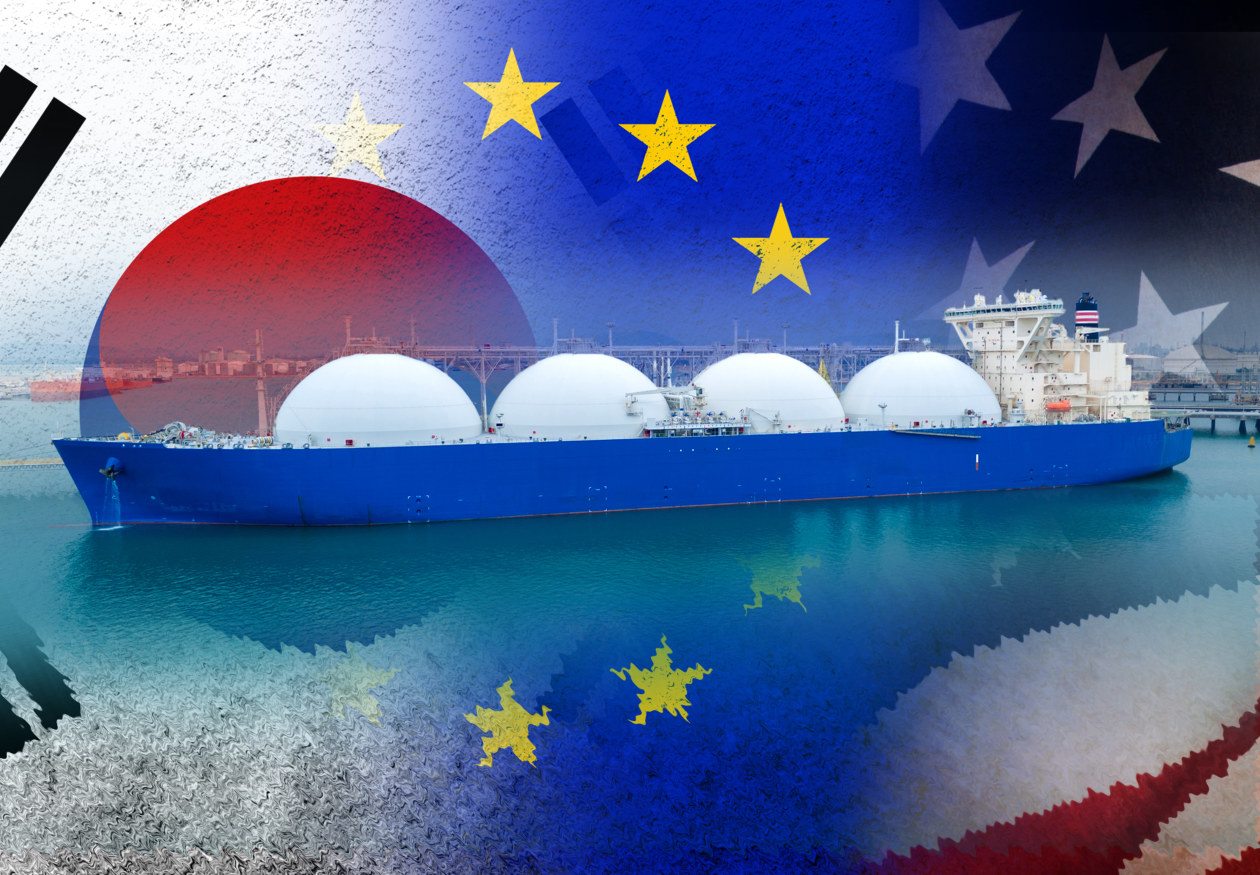
The U.S. has secured trade agreements with the European Union and South Korea, committing them to billions in energy product purchases, predominantly liquefied natural gas (LNG). These deals capitalize on the U.S.'s status as the world's largest LNG exporter and are seen as a significant market shift, though they prompt questions regarding the capacity of U.S. producers to meet the substantial increase in demand.
New trade agreements with the European Union and South Korea are poised to create a significant demand catalyst for the U.S. energy sector, specifically for liquefied natural gas (LNG). These deals, committing the partners to billions of dollars in energy purchases, leverage the U.S.'s position as the world's largest LNG exporter. A senior portfolio manager at Tortoise Capital described the agreements as a "significant step-change," suggesting a structural shift in the market rather than a transient event. However, the primary uncertainty tempering this positive outlook is the operational question of whether U.S. producers possess the capacity to meet this projected surge in demand. This creates a classic demand-pull scenario where the key variable becomes the supply-side response, making producer capacity and infrastructure a critical focal point for assessing the ultimate beneficiaries of these trade policies.
AI-powered research, real-time alerts, and portfolio analytics for institutional investors.
Request DemoOverall Sentiment
moderately positive
Sentiment Score
0.40
