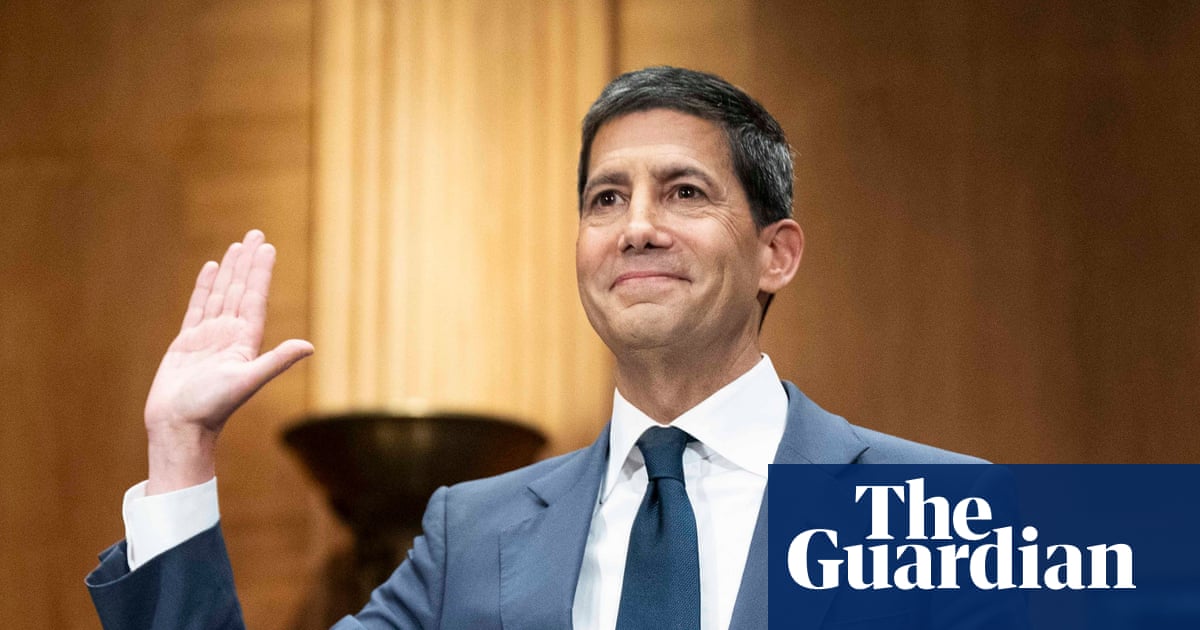
Kevin Warsh is set to advance toward Senate confirmation as Trump’s Fed pick, with the Senate banking committee expected to vote Wednesday and the full Senate likely to confirm him. The Fed is expected to keep rates unchanged at 3.50%-3.75% at Powell’s likely final meeting, while inflation remains elevated and oil-price disruption from the Iran war adds pressure. The article underscores heightened political pressure on Fed independence and uncertainty over whether Powell will remain on the board through January 2028.
The market implication is less about the nomination itself and more about the regime shift in how policy credibility is priced. If investors conclude the Fed’s reaction function is becoming politically contingent, the term premium can reprice higher even without an immediate move in front-end policy rates, steepening the curve and tightening financial conditions through the back door. That is bearish for duration-sensitive assets because the first trade is usually not “more cuts,” but a larger inflation risk premium and less confidence that real rates will stay appropriately restrictive.
The second-order effect is a volatility regime change. A Fed chair perceived as politically constrained raises the odds of stop-start messaging, which tends to widen rate vol, FX vol, and equity dispersion even if cash yields initially barely move. Financials may look superficially helped by a steeper curve, but the cleaner expression is in the losers: long-duration growth, levered balance sheets, and any sector whose valuation depends on a stable discount rate over 3-5 years.
The key catalyst window is the next 1-8 weeks: confirmation timing, whether Powell remains on the board, and whether legal threats to current or former governors keep the story in the headlines. Over months, the bigger risk is that inflation expectations de-anchor at the margin; if oil disruption and easier policy expectations overlap, the market may start pricing a higher neutral rate path, which would reverse any initial rally in risk assets. The contrarian view is that a politicized chair may actually deliver less easing than promised if inflation persists, because the Fed would have to overcompensate later to restore credibility.
The most asymmetric setup is that the market underprices the probability of a messy transition rather than the policy endpoint. Even if Warsh is confirmed quickly, a lingering Powell presence creates dual-center uncertainty that can keep front-end rate direction murky and push investors toward defensive positioning until the governance question resolves cleanly.
AI-powered research, real-time alerts, and portfolio analytics for institutional investors.
Request DemoOverall Sentiment
mildly negative
Sentiment Score
-0.15
