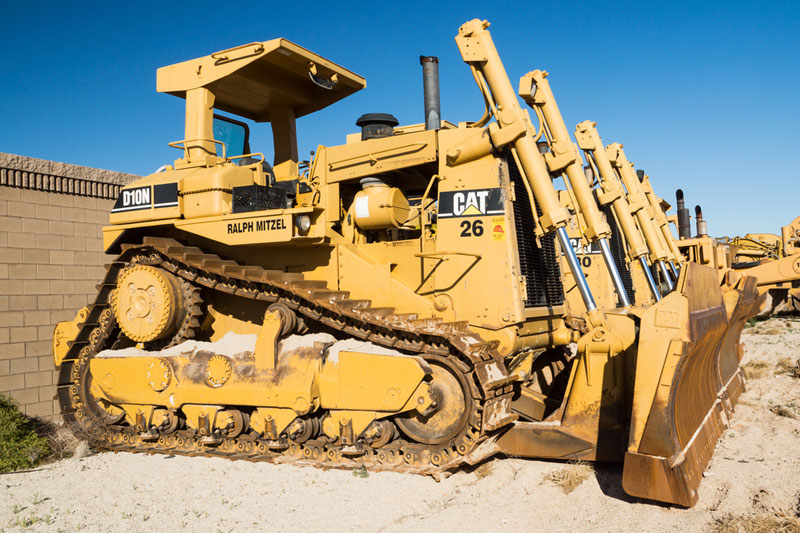
Caterpillar’s backlog has swelled to about $40 billion, with new orders up more than 70% in a quarter and sales guidance for fiscal 2026 sitting at the high end of estimates. However, margin upside is constrained by tariffs and raw material inflation, while truck sales fell 19% year over year and 12% quarter over quarter. The bull case centers on power generation and data centers, with potential to double power-generation revenue by 2030 and possibly triple annual data-center revenue.
CAT is transitioning from a cyclical machinery name into a constrained-capacity, mix-driven earnings story. The key second-order effect is that backlog growth is only bullish if the company can clear it without forcing expedient pricing or suboptimal product mix; otherwise, the backlog becomes a margin trap, not a margin bridge. That makes the next 2-3 quarters more important than the next 2-3 years: investors will be trading the pace of backlog conversion and whether service/parts can offset weaker truck mix and tariff leakage.
The market is likely underappreciating the beneficiaries of CAT’s power-generation pivot. If data-center and prime-power demand is real, the spillover winners are not just CAT suppliers but also electrical infrastructure and thermal management vendors that can sell into the same buildout with shorter delivery cycles and less tariff exposure. Conversely, mining truck weakness is an early warning for adjacent suppliers with more elastic demand and lower pricing power; the replacement-cycle thesis can easily slip if commodity capex stays disciplined through 2026.
The contrarian view is that the stock is already discounting a best-case mix shift while the cost line remains less controllable than the top line. Premium valuation plus elevated expectations means CAT likely needs both order conversion and evidence of margin stabilization to justify multiple support; absent that, any delay in the 2026 replacement ramp could compress the multiple before earnings catch up. This creates a favorable setup for relative-value trades rather than outright directional longs.
Catalysts over the next 60-180 days are less about demand and more about commentary on pricing discipline, capacity additions, and the quality of backlog conversion. The downside tail is a scenario where tariffs, commodities, and a weaker truck mix offset power-generation upside, leaving EPS growth below the current high-end sales narrative. In that case, the stock can de-rate even if revenue holds up.
AI-powered research, real-time alerts, and portfolio analytics for institutional investors.
Request DemoOverall Sentiment
mildly positive
Sentiment Score
0.15
Ticker Sentiment
