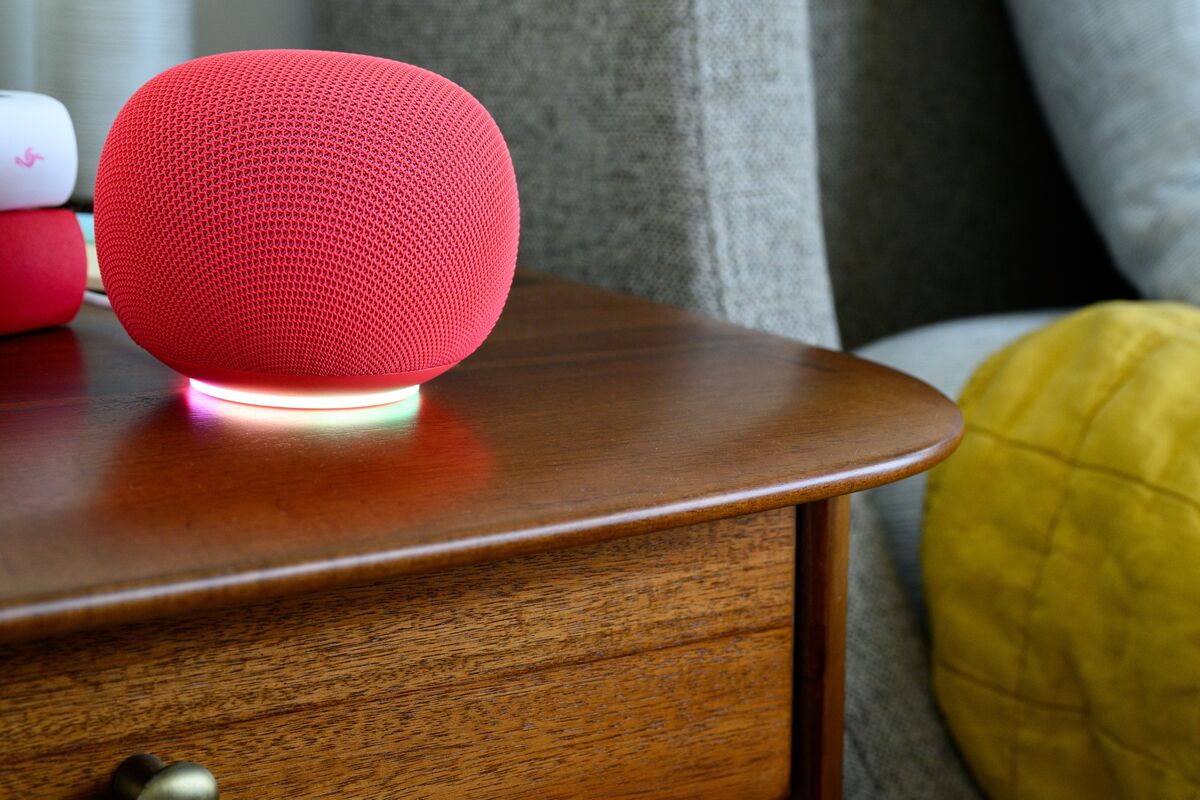
Google is launching a new $100 Home Speaker on June 25, its first new speaker device in six years, as it tries to bring Gemini directly into the home. The article is skeptical that the device meaningfully advances Google's AI strategy, noting that earlier home devices were built around the less advanced Google Assistant. The piece is largely a product commentary and is unlikely to have a material near-term market impact.
This launch looks less like a product event and more like a distribution test for Gemini in the one environment where monetization is still weakest: the home. The key issue is not whether the hardware sells a few hundred thousand units, but whether it changes user behavior enough to expand daily query frequency and retention; on that metric, a $100 speaker is a low-conviction wedge unless Google can prove materially better latency, ambient usefulness, or family-level utility than existing assistants. In other words, the market should treat this as an advertising funnel and ecosystem retention play, not a near-term hardware profit driver.
Competitive dynamics are asymmetric: the biggest loser is likely the broader smart-speaker category, because this reframes the device from utility appliance to AI subscription gateway. That is a harder value proposition for consumers, which means Amazon’s installed base and third-party accessory makers could see slower refresh cycles if buyers wait for a clearer winner. The second-order effect is on Google’s own economics: if the device lifts engagement but not paid conversion, it may increase inference costs without offsetting revenue, pressuring near-term margins even if top-line consumer sentiment improves.
The catalyst path is long-dated. Over the next few days, this should trade more on narrative than numbers; over the next 3-6 months, investor focus shifts to attach rates, usage intensity, and whether Gemini becomes a sticky home interface or just another feature. The main tail risk is disappointing usage after launch, which would reinforce the view that consumer AI is still strongest on phones and desktops, not ambient devices. A positive surprise would require clear evidence of recurring household use, not just unit sell-through.
The contrarian view is that the market may be underestimating how important a modestly successful launch could be for Google’s ecosystem moat. Even a weak direct ROI can be strategically valuable if it reduces churn to rival ecosystems and broadens Gemini familiarity ahead of more monetizable surfaces like Search, Workspace, and YouTube. But absent proof of engagement, the setup favors skepticism: hardware launches like this often create headline alpha while leaving fundamental estimates unchanged.
AI-powered research, real-time alerts, and portfolio analytics for institutional investors.
Request DemoOverall Sentiment
mildly negative
Sentiment Score
-0.15
Ticker Sentiment
