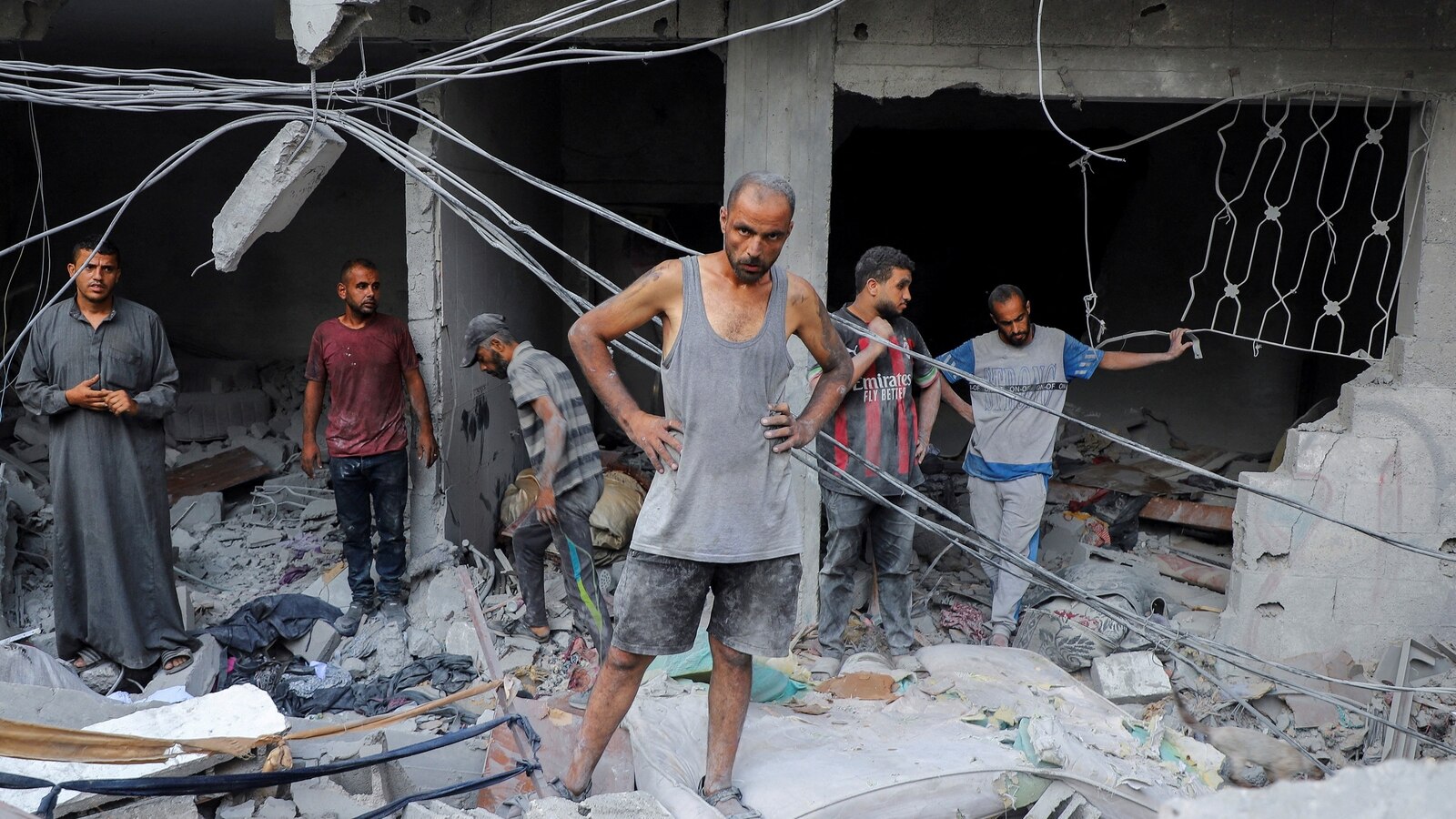
Former President Donald Trump, addressing the UN General Assembly, criticized nations for recognizing a Palestinian state, asserting such a move would 'reward' Hamas for its atrocities. Trump also called for the immediate release of hostages held by Hamas and stated the group has repeatedly rejected reasonable ceasefire offers, underscoring a firm stance on the ongoing conflict's diplomatic resolution.
In a speech at the United Nations General Assembly, former President Donald Trump adopted a hawkish stance on the Israeli-Palestinian conflict, directly criticizing allies including France, Canada, and the U.K. for moving to recognize a Palestinian state. He framed such diplomatic recognition as a 'reward' to Hamas for its atrocities that would 'encourage continued conflict,' establishing a clear point of diplomatic divergence. This position is reinforced by his assertion that Hamas has 'repeatedly rejected reasonable offers' for a ceasefire, placing the onus for the ongoing conflict squarely on the group. Trump's comments, characterized by a moderately negative sentiment, highlight the persistent geopolitical tensions and the potential for a significant shift in U.S. foreign policy should his administration return, signaling a less multilateral approach to resolving the conflict.
AI-powered research, real-time alerts, and portfolio analytics for institutional investors.
Request DemoOverall Sentiment
moderately negative
Sentiment Score
-0.40
