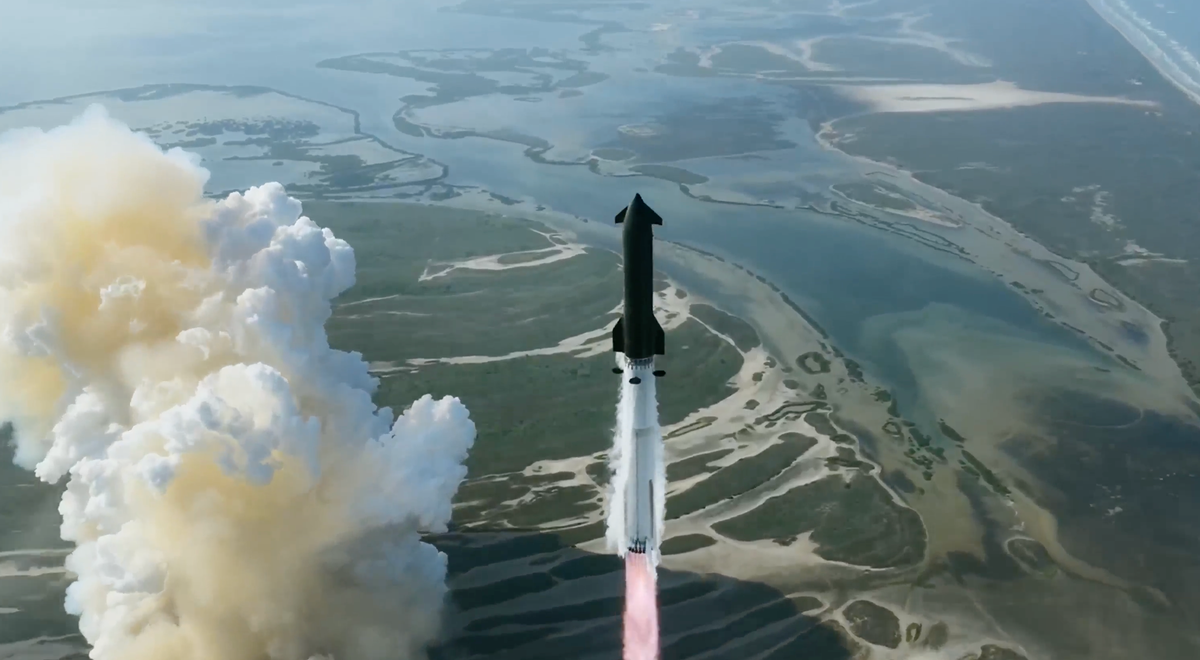
SpaceX’s 12th Starship test was largely successful, with the V3 rocket launching, separating, deploying 20 dummy Starlink satellites plus 2 heat-shield imaging satellites, and completing a planned splashdown after roughly 47 minutes. The flight still showed execution risk, including one failed engine ignition on the booster and one engine out on Starship, but the overall demonstration supports progress toward future Artemis missions and SpaceX’s long-term launch capacity of up to 100 metric tons. The result is favorable for SpaceX’s IPO narrative and its Starlink and future space-based AI ambitions.
The main investment implication is not the launch itself, but the evidence that Starship is moving from “science project” toward an asset that can begin pricing in a real operating cadence. That matters because the market will start discounting a step-change in launch cost and payload capacity before the full technical win is proven; if the iteration cycle keeps compressing over the next 2-3 test flights, the probability-weighted value of Starlink expansion and future launch services rises materially. The biggest second-order beneficiary is not SpaceX equity yet, but every adjacent business that becomes feasible only if marginal launch costs fall another order of magnitude: orbital data relay, in-space manufacturing, and government payload procurement.
The near-term competitive effect is most negative for incumbent launch providers and any “fewer, bigger launches” satellite economics that depend on constrained lift capacity. If Starship reliability improves, the pricing power of traditional launch vendors gets attacked from both ends: lower launch cost per kilogram and higher mission flexibility. That also pressures satellite OEMs and constellation operators that have built business cases around incremental deployment; they may need to accelerate capex or risk being outflanked by a Starlink-style vertically integrated model.
The key risk is that the market extrapolates too much from a single successful test while the program is still one or two bad flights away from resetting timelines. This is a classic long-duration catalyst: the stock reactions are more likely to show up over months as validation accumulates, not days. The more important read-through is for capital allocation inside the space ecosystem — if Starship’s payload economics become believable, capital will migrate away from incremental launch startups toward payload, software, and defense-adjacent mission systems with clearer monetization.
Contrarian view: the current narrative may still underappreciate how much of SpaceX’s future valuation is already tied to Starlink growth rather than launch prestige, so the real upside is only unlocked if Starship lowers replenishment and expansion costs enough to sustain aggressive satellite refresh. On the flip side, the market may be overconfident that technical progress automatically shortens the path to Artemis-related revenue; NASA timelines are politically fragile, and any slip keeps this in the “promising optionality” bucket rather than a cash-flow driver.
AI-powered research, real-time alerts, and portfolio analytics for institutional investors.
Request DemoOverall Sentiment
moderately positive
Sentiment Score
0.55
