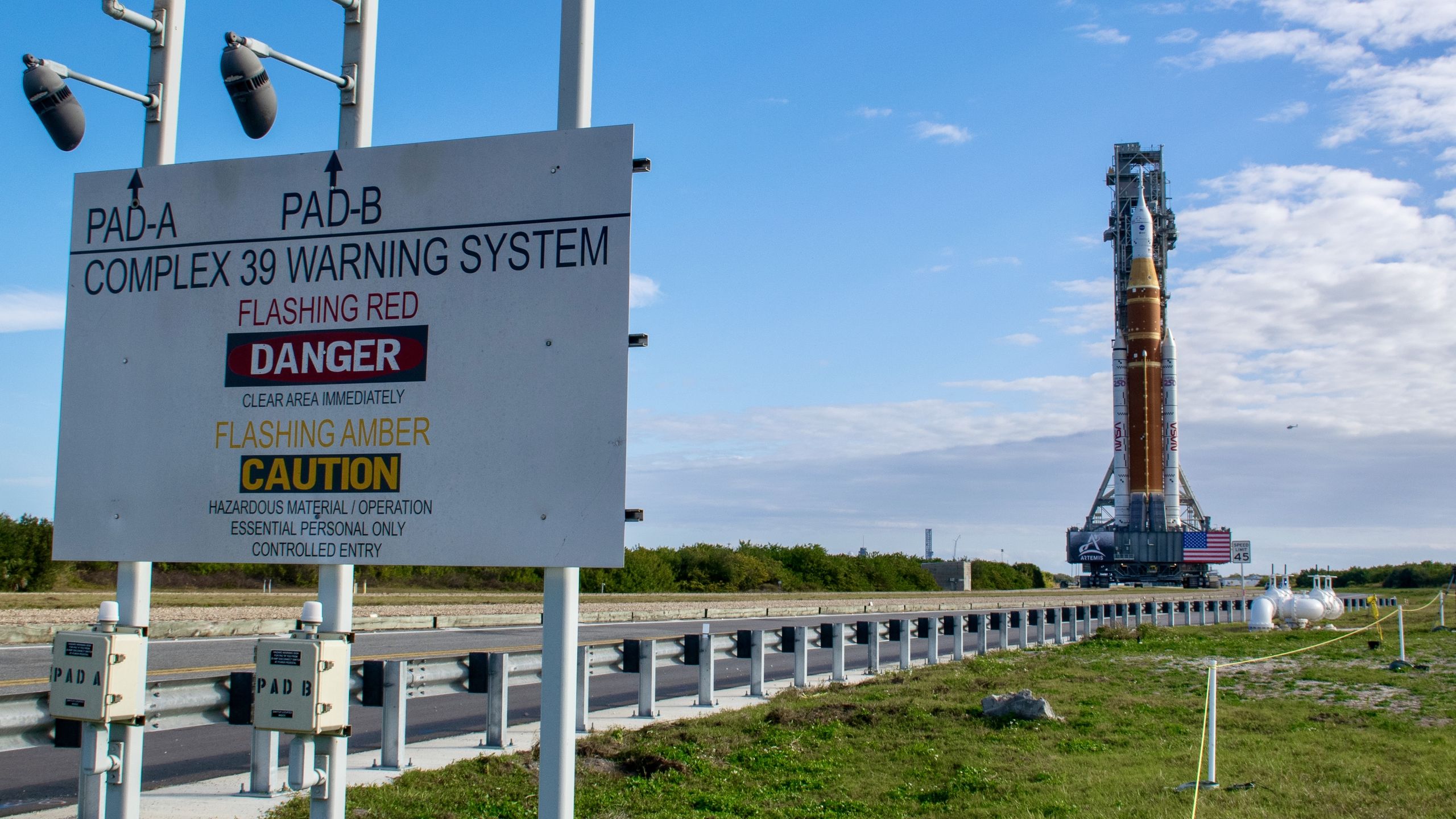
NASA has re-scoped Artemis 3 from a crewed lunar landing to an Earth-orbit Orion-to-lander rendezvous in 2027, moving the program's first crewed lunar landing to Artemis 4 in 2028 with a possible repeat on Artemis 5 that year. The agency will standardize the SLS design to accelerate manufacturing and increase launch cadence (from roughly once every three years to a target of once every 10 months), citing ASAP safety concerns and HLS (SpaceX Starship, Blue Origin Blue Moon) readiness shortfalls; Artemis 2 remains targeted for an April launch window pending SLS repairs.
Market structure: NASA’s pivot turns near-term moon-landing revenues from HLS builders (SpaceX/Blue Origin — privately held) into longer, steadier demand for SLS-related prime contractors (Lockheed Martin LMT, Northrop Grumman NOC, Boeing BA, Aerojet Rocketdyne AJRD). Standardizing SLS and targeting a ~10‑month cadence (vs ~3 years today) implies a ~3–4x increase in launch frequency over the next 3–5 years if executed, creating predictable topline for primes but squeezing smaller HLS suppliers and delaying milestone payments tied to lunar landings.
Risk assessment: Tail risks include a catastrophic SLS failure, congressional funding cuts, or rapid Starship operational maturity that renders SLS economically obsolete — each could erase multi‑year cashflows for primes. Time horizons: immediate (days–weeks) hinge on Artemis 2 outcomes and ICPS repair results; short term (3–12 months) on NASA hiring/funding moves; long term (2028+) on cadence execution and HLS cryo-transfer demos. Hidden dependencies include skilled workforce scale‑up, cryogenic-propulsion supply chains, and insurance/LIability costs that can materially raise unit costs.
Trade implications: Favor defensive exposure to large primes tied to SLS cadence (LMT, NOC, AJRD) while underweight commercial aviation/airframe cyclicality (BA) and private HLS suppliers. Volatility should rise around Artemis 2 (April windows) — use 6–12 month call spreads or LEAPS to express asymmetric upside and protect against benching risk. Cross-asset: modest pressure on long-dated Treasuries if Congress approves incremental NASA spending; small upward pressure on aerospace metals (titanium, aluminum) over 12–36 months.
Contrarian angles: The market may underprice execution risk — boosting cadence from multi-year to 10 months is operationally optimistic and could cause cost inflation that benefits large primes via higher contract amendments. Conversely, a flawless Artemis 2 + rapid Starship cryo demos within 12 months would accelerate a shift to commercial launches, making public primes' SLS revenues finite — a binary outcome that creates cheap asymmetric option-like payoffs today in select small suppliers (cryogenics/avionics) overlooked by consensus.
AI-powered research, real-time alerts, and portfolio analytics for institutional investors.
Request DemoOverall Sentiment
mixed
Sentiment Score
-0.05
