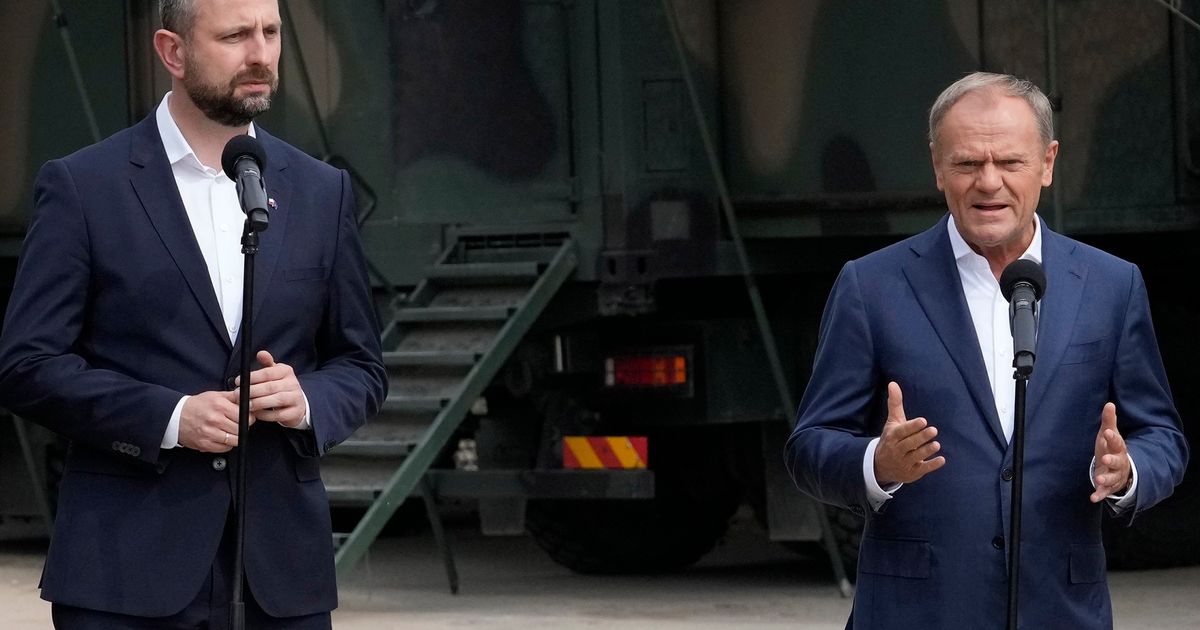
The U.S. said the planned non-deployment of 4,000 troops to Poland is only a temporary delay, easing immediate concerns in Warsaw. Polish officials welcomed the clarification, but the episode underscores continued U.S. pressure on Europe to take greater responsibility for its own defense as Washington reviews force posture across Europe. NATO and Polish leaders indicated the troop issue remains unresolved, with no timeline given for the delay.
This is less about the near-term troop count and more about the signaling value of U.S. force allocation in Europe. Even if the delay is temporary, it reinforces a medium-term thesis that Europe must internalize a higher baseline for defense spending, procurement, and readiness, which is structurally supportive for continental defense names and U.S. primes with European exposure. The second-order effect is on budget urgency: when allies believe the U.S. can re-prioritize deployments quickly, procurement cycles tend to shorten and multiyear replenishment demand becomes less discretionary.
The bigger market implication is that Poland’s “model ally” status may translate into accelerated industrial policy, local offset requirements, and faster contracting for air defense, ammunition, drones, and logistics. That benefits systems integrators and munitions suppliers more than platform-heavy OEMs, because the fastest path to capability is stockpile replenishment rather than large bespoke programs. A rotation delay also tends to lift the probability of more permanent allied basing over time, which is a quiet positive for infrastructure-adjacent defense beneficiaries and a negative for European equities if it intensifies the narrative of strategic dependency.
The contrarian read is that the market may be overpricing the political headline while underpricing the bureaucratic lag. A temporary delay does not equal an enduring reduction, and in the next 1-3 months the most likely outcome is negotiation rather than retrenchment. The real catalyst is whether Europe responds with concrete budget commitments and multi-year orders; absent that, this fades into noise. If it becomes a template for broader U.S. rotation flexibility, however, the tail risk is a repricing of European security assumptions and a persistent bid for defense multiples.
From a trading perspective, the best expression is to own defense throughput rather than troop presence. The setup favors companies tied to munitions, air defense, and battlefield replenishment, where order books can re-rate before revenue catches up. The downside risk is that the headline reverses in weeks and the trade needs a catalyst-based stop, not a thesis-based one.
AI-powered research, real-time alerts, and portfolio analytics for institutional investors.
Request DemoOverall Sentiment
neutral
Sentiment Score
0.05
