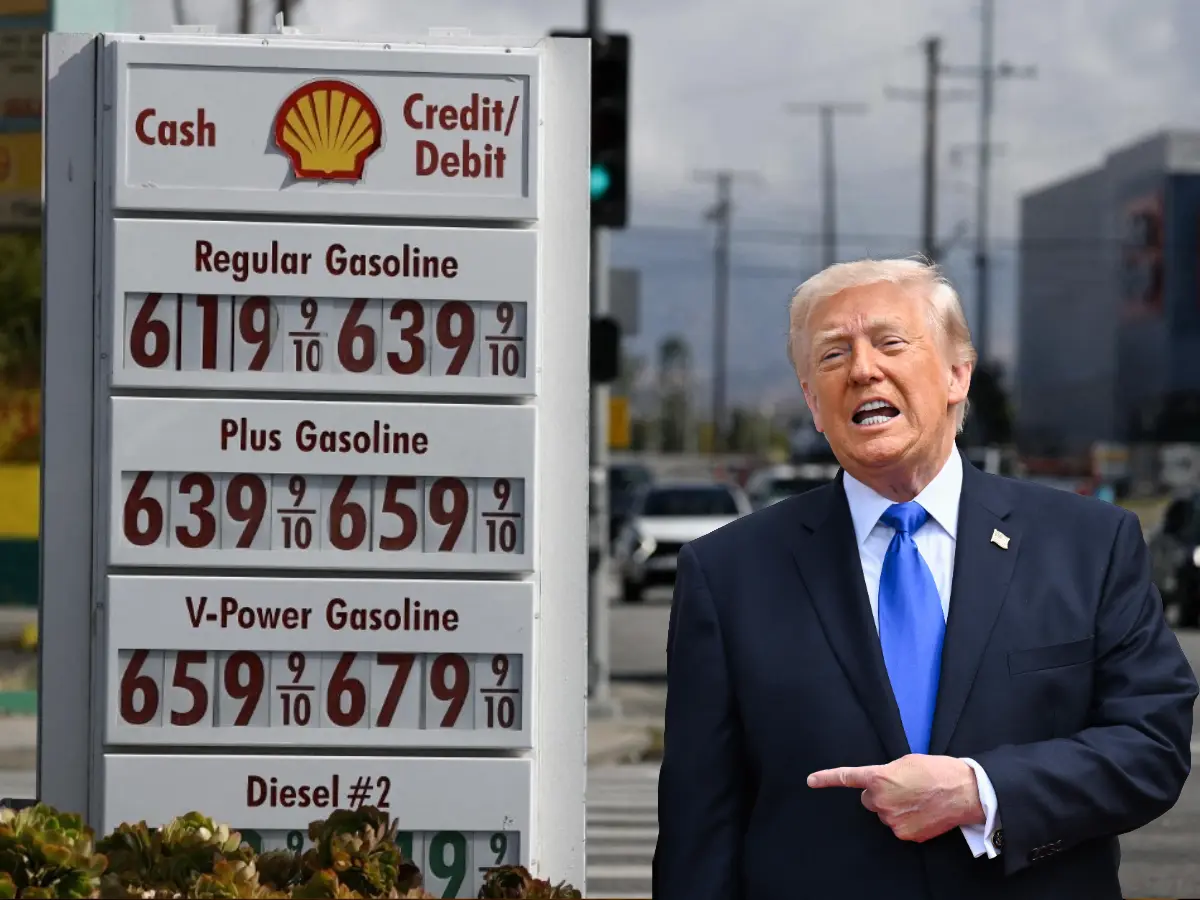
US gasoline prices have risen above $4.50 a gallon for the first time since July 2022, with the national average at $4.52, as Strait of Hormuz disruptions driven by the US-Israeli conflict with Iran push Brent crude up about 58% since the conflict began. Gasoline inventories fell by more than 6 million barrels last week to 222.3 million barrels, while Brent and WTI recently traded at $107.01 and $99.12 a barrel, respectively. The spike adds inflationary pressure and political risk ahead of the US midterm elections, particularly as Trump’s approval rating slips to 37%.
The market is now transitioning from an oil-shock story to a consumer-margin shock. At these pump prices, the first-order winner is upstream energy, but the second-order effect is broader inflation re-acceleration just as discretionary demand is already fragile; that combination tends to hit retailers, travel, autos, and small-cap cyclicals before it shows up in headline CPI. The political overlay matters because policy response risk rises nonlinearly when fuel becomes a voter pain point, making the current spike more vulnerable to abrupt intervention than a normal commodity rally.
The more important setup is that gasoline inventories are tightening faster than crude, which suggests refining capacity and distribution constraints are amplifying the move. That favors refiners with complex systems and Gulf Coast/logistics advantages, but only if feedstock spreads stay wide; if crude keeps rallying while demand softens, refining margins can compress quickly. The cleanest beneficiary on a relative basis is not the broad energy complex, but names with direct pricing power and minimal volume elasticity exposure.
The bearish trade is around duration: this is likely a weeks-to-months catalyst, not a multi-year structural oil bull unless Hormuz risk persists. The main reversal paths are a diplomatic de-escalation, SPR/strategic inventory action, or demand destruction from summer driving behavior once consumers cut back. The consensus may be underestimating how fast political pressure can force a policy reprieve, which argues for harvesting upside in energy beta rather than chasing it outright.
AI-powered research, real-time alerts, and portfolio analytics for institutional investors.
Overall Sentiment
strongly negative
Sentiment Score
-0.55
Ticker Sentiment
