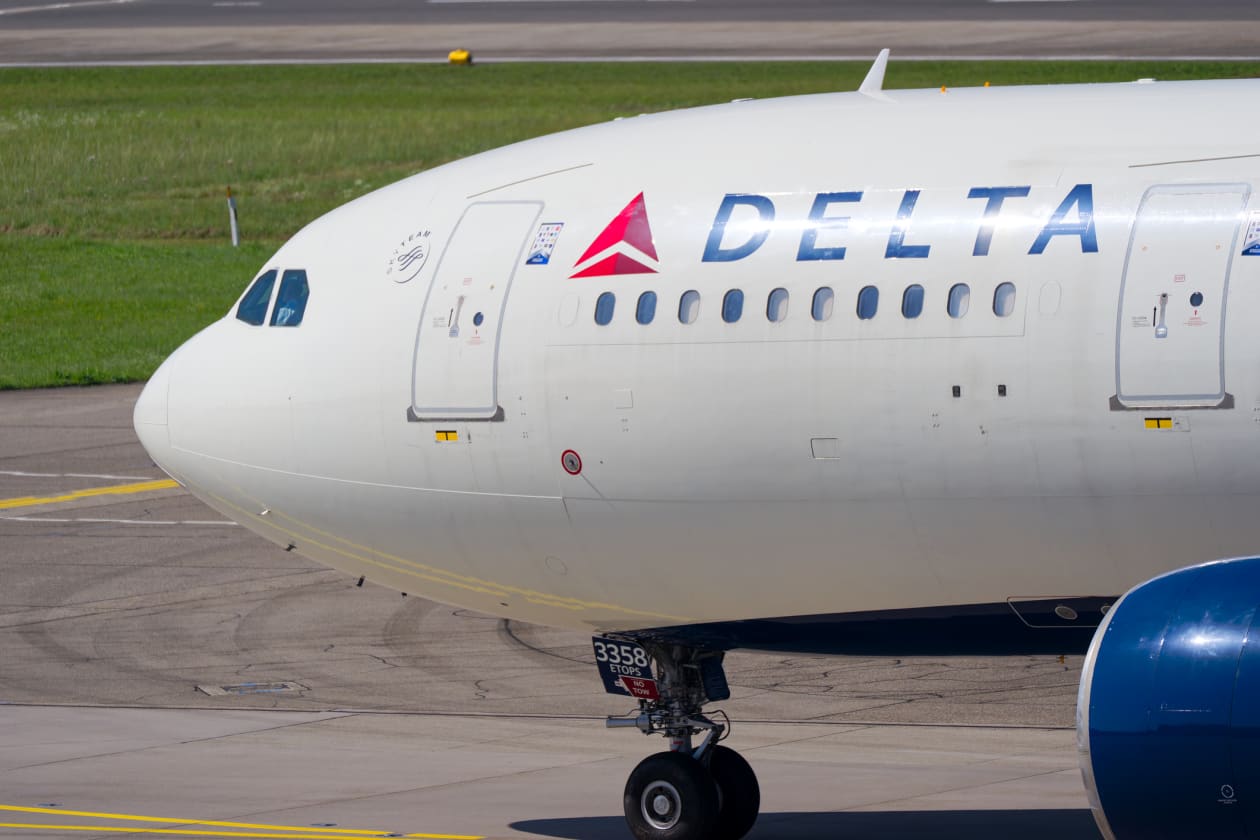
Delta Air Lines reported record Q2 operating revenue up 14% to $17.7B, beating the $17.55B FactSet average, and posted more than $1B in profit. The stock rose in early trading as strong travel demand offset surging fuel costs. Management affirmed the full-year outlook, reinforcing a positive earnings trajectory despite higher operating input costs.
This is less about a one-quarter airline beat and more about a proof point that premium demand is still absorbing higher ticket prices and fuel, which matters most for network carriers with strong loyalty and corporate share. DAL is the cleanest beneficiary versus weaker fare-sensitive names because the mix can offset some fuel inflation; the bigger second-order loser is the lower-quality end of the industry where price competition prevents full pass-through and leverage to fuel is higher.
The market should separate near-term momentum from sustainability. In the next few weeks, the stock can keep working if investors extrapolate record revenue into a clean margin story, but over the next 1-3 months the key variable is jet fuel and the jet crack spread: if fuel stays elevated while revenue per available seat mile normalizes, this becomes a margin compression story rather than a structural re-rating. That is also the channel by which refiners with exposure to distillate cracks can see modest support, while airlines with weaker balance sheets get punished first.
The contrarian risk is that consensus reads this as an all-clear on consumer demand when it may just be a high-end travel story plus disciplined capacity. If business travel or discretionary leisure softens into autumn, the lagged effect of fuel inflation will show up fast in guidance and free cash flow. CARR is not a direct read-through here unless the ticker was intended as a broad air-travel proxy; there is no obvious fundamental linkage.
AI-powered research, real-time alerts, and portfolio analytics for institutional investors.
Overall Sentiment
moderately positive
Sentiment Score
0.45
Ticker Sentiment
