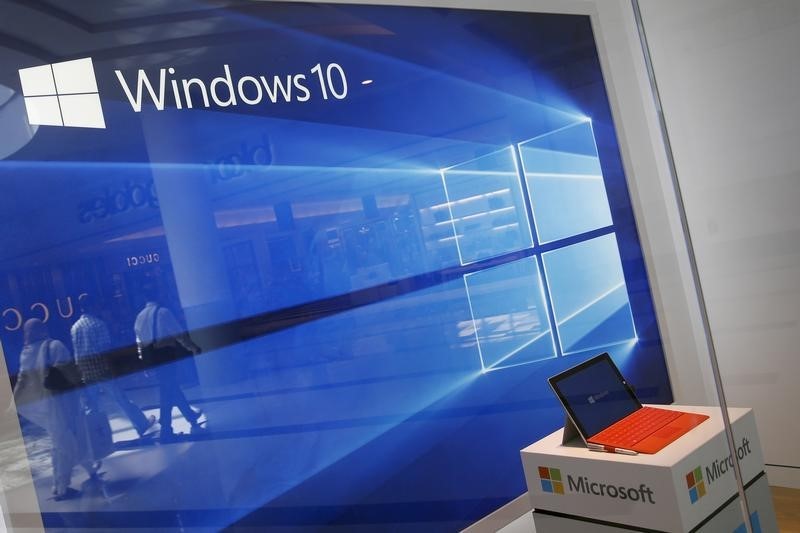
Piper Sandler reiterated an Overweight rating on Microsoft with a $540 price target, citing improved Copilot features, more than 5 million expected quarter-over-quarter Copilot seat additions, and margin support from converting AI capex into cloud revenue. The firm also highlighted the updated OpenAI agreement and Microsoft’s position as a top pick alongside growth from Anthropic. Overall, the piece is supportive of Microsoft’s medium-term outlook but is primarily analyst commentary rather than a material new company event.
The near-term read-through is not just “MSFT is better,” but that Microsoft is moving from an AI-capex story to an AI monetization story, which tends to matter more for multiples than absolute product velocity. If Copilot seat additions keep compounding while first-party model usage shifts inference spend onto Microsoft’s own stack, the market should start valuing the business less like a software vendor with optional AI exposure and more like a cloud platform with embedded consumption upside. That supports multiple expansion in a tape where mega-cap quality remains the cleanest way to express AI without taking pure-model risk.
The second-order winner is the broader enterprise implementation ecosystem. A successful conversion from pilots to full-scale deployments should lift adjacent spend in security, data governance, workflow automation, and systems integration, which argues for beneficiaries like application-layer and services names even if Microsoft itself remains the anchor. By contrast, standalone AI infrastructure beneficiaries are more exposed if enterprise customers increasingly consume AI through bundled cloud/productivity contracts rather than assembling best-of-breed stacks.
The main risk is that the market is already paying for this transition, so the stock likely needs tangible evidence of net seat growth and margin stabilization over the next 1-2 quarters to extend meaningfully. If seat additions decelerate, or if AI usage monetization cannibalizes higher-margin legacy seats faster than expected, the setup can revert to “great story, expensive stock” quickly. The contrarian takeaway is that the catalyst may be underappreciated in duration, not magnitude: the real re-rating path is 12-24 months of compounding attach rates and margin mix, not a one-quarter beat.
For portfolio construction, this looks better as a relative-value expression than as a naked momentum chase. The cleanest trade is to stay long Microsoft against lower-quality AI beneficiaries where revenue visibility is weaker and valuation is more narrative-driven. Option structures make sense only if you want to monetize the post-earnings drift, since implied upside is likely to be dampened by the consensus already leaning positive.
AI-powered research, real-time alerts, and portfolio analytics for institutional investors.
Request DemoOverall Sentiment
mildly positive
Sentiment Score
0.35
Ticker Sentiment
