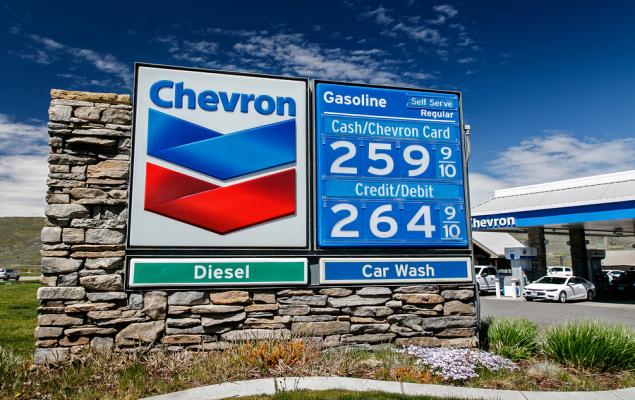
Chevron reported third-quarter 2025 EPS of $1.85, beating the Zacks consensus by $0.19 and recording production of 4.1 million BOE/day (up 21% y/y), but analysts have cut full-year estimates amid weak oil prices: earnings fell 23.8% in 2024 and are forecast down 27.2% in 2025 with a rebound of 10.2% in 2026. At an investor day Chevron outlined a 2026 synergy/cost-savings plan tied to the Hess acquisition ($1.5bn Hess synergies; $3–4bn structural cost reductions by end-2026), a capex/dividend breakeven below $50 Brent through 2030, a 2–3% annual production growth target to 2030, and delivery of an AI data-center power project targeting first power in 2027; the company pays a $6.84 dividend (4.6% yield).
Market structure: Chevron’s move to lift production (4.1 mboe/d, +21% y/y) and a stated 2–3% annual growth to 2030 shifts incremental supply toward integrated majors, advantaging low‑cost, scale players (CVX, XOM) and pressuring smaller, higher‑cost E&P names. Breakeven guidance (capex+dividend < $50/bbl Brent) implies meaningful earnings sensitivity only below $50 — above that oil price moves flow quickly to cash and distributions. Cross‑asset: a prolonged sub‑$70 Brent paradigm compresses earnings and widens credit spreads for levered E&Ps, reduces implied vols in large-cap integrateds, and favors FX strength in USD if oil depresses global inflation expectations.
Risk assessment: Tail risks include (1) a deep demand shock/recession sending Brent < $45 for >90 days, forcing further downgrades and dividend re-assessment; (2) a supply shock/geopolitical event lifting Brent > $90 and producing a sharp cashflow re-rating; (3) integration failure of Hess synergies ($1.5bn) or missing $3–4bn cost cuts by end‑2026 that would hurt free cash flow and leverage. Near term (weeks–months) earnings revisions and OPEC decisions dominate; medium/long term (2026–2030) hinge on synergy delivery and AI power project commercialization (first power 2027).
Trade implications: Tactical income capture in CVX is viable but conditional: prefer buy‑and‑write to harvest the 4.6% yield while capping downside. Relative trades: long XOM vs short CVX (size 2–3% net) to play superior downstream/refining resilience and lower estimate drift at XOM; short small‑cap E&Ps (e.g., high‑cost producers) to express structural oversupply risk. Options: buy 6–9 month 10% OTM puts on CVX for protection if Brent 30‑day average < $55; alternatively sell 1–2 month OTM calls against a 2–3% long to boost yield.
Contrarian angles: Consensus underweights optionality from Chevron’s AI data‑center power business and potential upside if Brent reclaims $80+; analysts have front‑loaded cuts but synergy realization through 2026 is a binary catalyst that could surprise to the upside. Reaction may be slightly overdone given a durable 4.6% yield and integrated balance‑sheet resilience — downside is limited if management defends distributions, but upside can be rapid with commodity shock; historical parallel: integrated majors outperformed in prior post‑downturn recoveries (2016–18). Monitor synergy cadence and Brent 3‑month trend for re‑rating triggers.
AI-powered research, real-time alerts, and portfolio analytics for institutional investors.
Request DemoOverall Sentiment
moderately negative
Sentiment Score
-0.40
Ticker Sentiment
