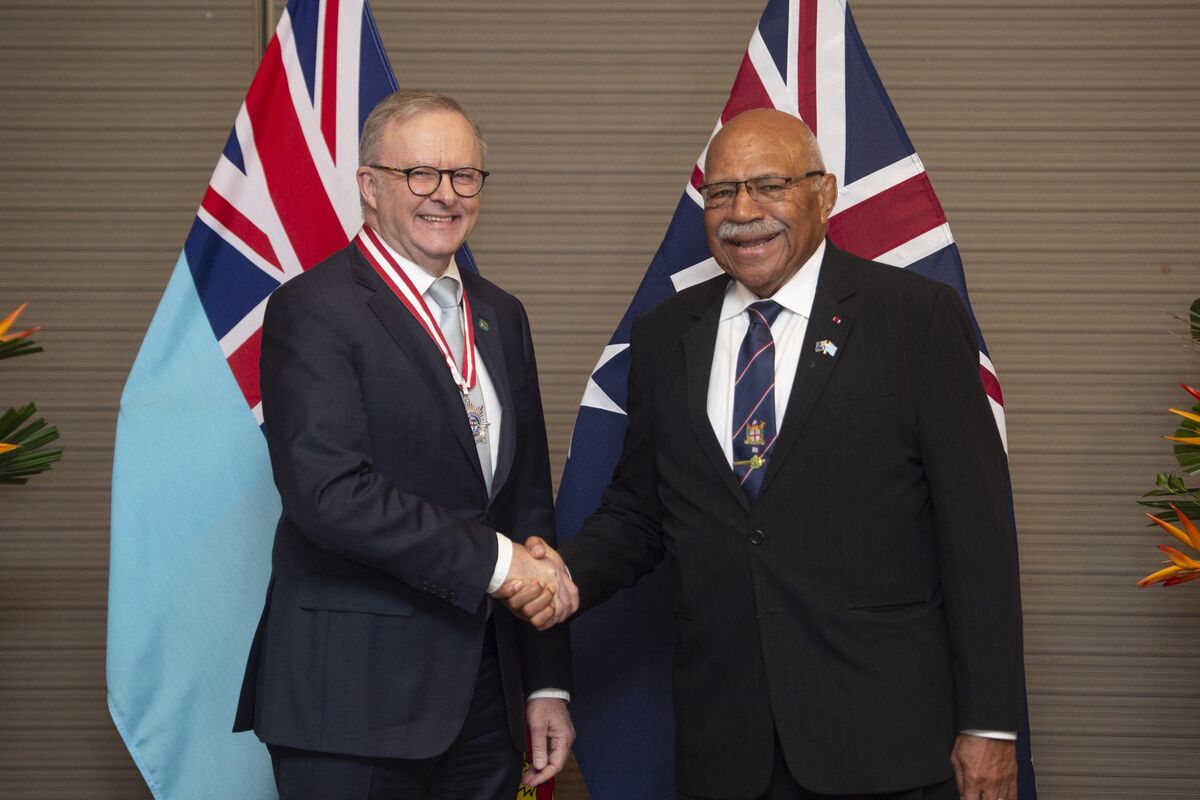
Australia and Fiji signed a mutual defense treaty and an additional “Ocean of Peace” agreement in Suva, making it Fiji’s first official alliance and deepening security ties. The deal is framed by Canberra as part of a South Pacific strategy to limit China’s influence, which increases regional geopolitical tension risk. Near-term market impact is likely more sentiment-driven than directly financial, but it can influence defense/security and broader risk pricing in the region.
This is more signaling than cash flow, but it matters because Pacific security alignment tends to rerate the probability of future procurement, not current revenue. The most plausible economic spillover is incremental spending on patrol vessels, maritime ISR, communications, and cyber/undersea-cable protection over the next 6-18 months, which favors defense primes and systems integrators more than any single local economy. In the near term, the equity impact should be muted unless the announcement is followed by budget language or a concrete base/access arrangement.
The competitive loser is China’s influence stack in the region: telecom, ports, and infrastructure bids become harder to win when alliance gravity shifts toward Canberra. That pressure is second-order but real, because governments often overcompensate after signing security deals by redirecting grant money and procurement to trusted partners. The more investable read-through is not Fiji itself; it is that Australia will need to fund the relationship, which raises the odds of higher defense and Pacific aid line items in future budgets.
The contrarian view is that consensus may be overestimating immediacy and underestimating execution risk. Fiji’s first formal alliance is politically meaningful, but unless it survives changes in local leadership and is paired with financing, it may remain a low-dollar, high-symbolism headline. What would falsify the bullish defense/containment thesis is 1) no increase in Australian Pacific security appropriations over the next 1-2 budget cycles, or 2) a competing Chinese aid/infrastructure package that quickly neutralizes the diplomatic gain.
AI-powered research, real-time alerts, and portfolio analytics for institutional investors.
Request DemoOverall Sentiment
mildly negative
Sentiment Score
-0.10
Ticker Sentiment
