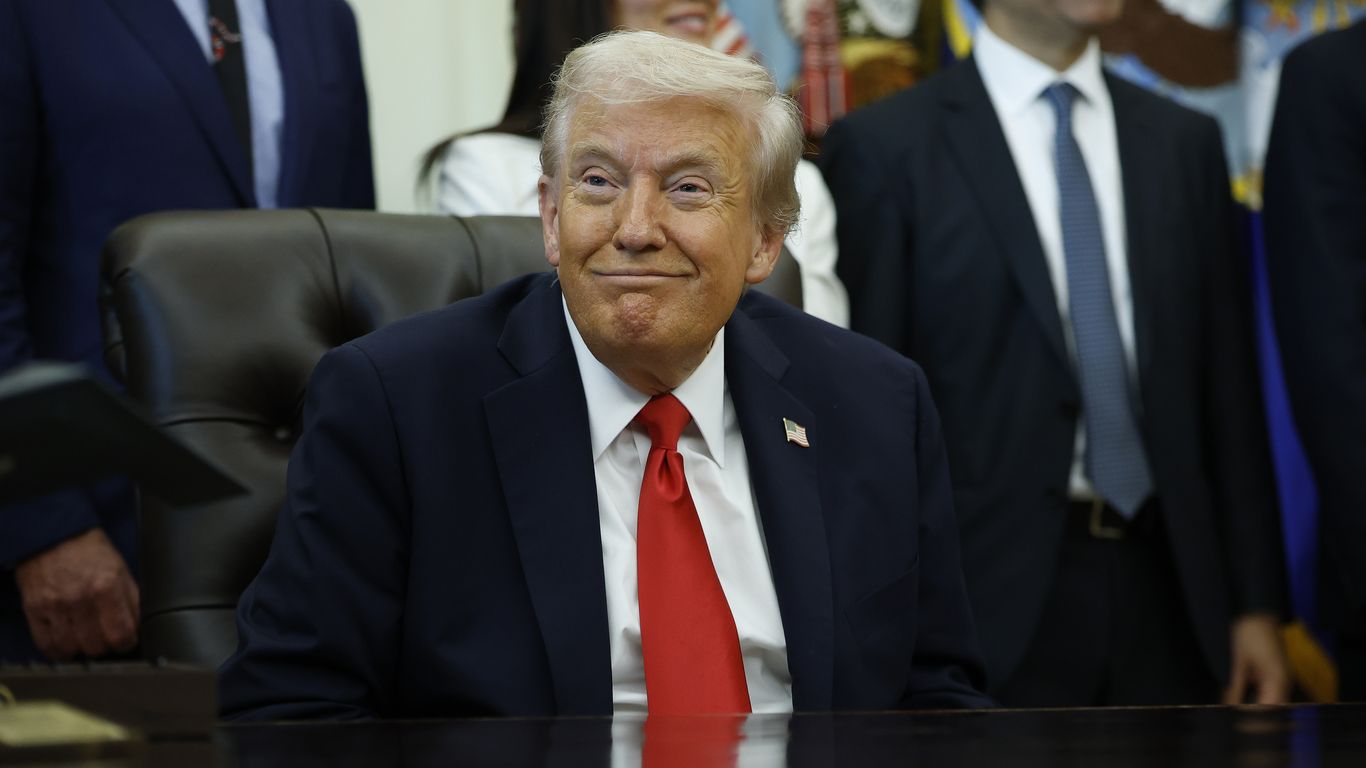
The White House released a three-page memo saying Trump is in "excellent health" and "fully fit" for duty, citing strong cardiac, pulmonary and neurological function, a 14-years-younger estimated cardiac age, and weight of 238 pounds. The report also noted chronic venous insufficiency, slight lower-leg swelling, hand bruising attributed to aspirin and handshaking, and questions remain about repeated heart CT scans and reported fatigue. The piece is politically relevant but unlikely to move markets.
The market consequence is less about Trump’s personal health than about the increasing probability of asymmetric information becoming a recurring governance overhang. That matters because opaque presidential health disclosures create episodic headline risk with no fundamental anchor, which tends to widen volatility premia around election-related policy assets, healthcare oversight narratives, and any security that trades on executive continuity assumptions. The immediate beneficiary is the White House itself: the more the narrative shifts to selective disclosure and credentialed reassurance, the more it can contain short-dated political damage, even if longer-dated trust decay persists.
The second-order effect is on the healthcare-information stack, not just politics. Each new disclosure episode reinforces demand for “proof” in a world where AI language can be used to dress up subjective assessments, which is a tailwind for firms in digital diagnostics, medical documentation, and healthcare data auditing. At the same time, it is a small but real reputational headwind for mainstream clinical workflow vendors if their outputs are perceived as easily massaged for PR purposes; the issue is not the tech itself, but the willingness of institutions to selectively surface favorable metrics.
For markets, the key catalyst window is the next 1-3 weeks, when the story either fades or gets re-accelerated by another visible public appearance, debate, or medical follow-up. The tail risk is a sudden deterioration or a conflicting leak, which would not just hit political sentiment but also force a repricing of succession odds, cabinet stability, and policy continuity expectations. The contrarian read is that the market is underpricing how durable this “trust discount” can become; repeated reassurance without full disclosure often helps for 24-72 hours, then increases skepticism and headline volatility on the next event.
AI-powered research, real-time alerts, and portfolio analytics for institutional investors.
Request TrialOverall Sentiment
neutral
Sentiment Score
-0.05
