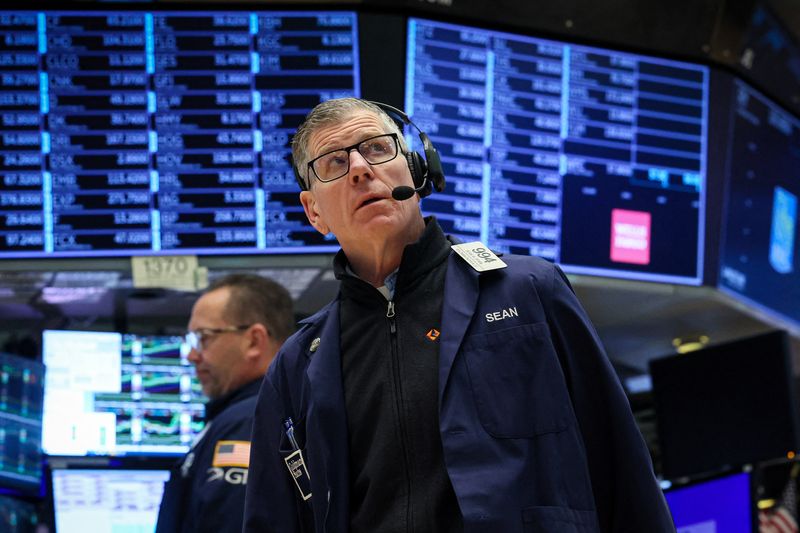
U.S. futures moved higher, with Dow futures up 129 points (0.3%), S&P 500 futures up 30 points (0.4%), and Nasdaq 100 futures up 207 points (0.7%), as AI sentiment stabilized and Middle East tensions eased. Brent crude fell 2.3% to $92.10 a barrel after Trump said the U.S. was close to a peace deal with Iran and the Strait of Hormuz would reopen once signed, easing inflation fears and pressuring yields. Nuvalent jumped on a $10.6 billion takeover offer from GSK, while Vail Resorts fell after cutting full-year guidance.
The near-term setup is a classic two-factor relief trade: lower geopolitical tail risk pulls down the inflation term premium, while AI leadership regains breadth after a single-name shakeout. The biggest second-order effect is in rates sensitivity: if the Iran deal is formalized, the market likely reprices not just spot oil but the forward inflation path, which can compress 2-year yields faster than the long end and reflate duration-sensitive growth. That creates a cleaner runway for semis and megacap tech even if the CPI print is noisy.
The more interesting read-through is that the AI trade is becoming less about index beta and more about relative winners in the supply chain. Companies perceived as “pure AI” but tied to crowded expectations remain vulnerable to any downgrade in capex durability, while infrastructure beneficiaries with better visibility should attract incremental capital rotation. The recent rebound suggests investors are still under-allocating to the broader ecosystem after using the Broadcom reset as a risk-off excuse.
On the loser side, the move in oil is a direct pressure valve for inflation-sensitive sectors, but the bigger issue is that consensus may be overestimating how quickly a partial Iran normalization translates into fully restored supply. If Hormuz reopens only gradually, crude can retrace meaningfully without collapsing, which argues for fading the most optimistic oil-deflation trades and focusing on rate-sensitive beneficiaries rather than outright energy shorts. The key catalyst sequence is CPI first, then any formal Iran announcement; that order matters because a hot inflation print could blunt the market’s willingness to fully discount lower oil.
Bottom line: this is a tactical risk-on tape, not a clean macro regime change. The best risk/reward is in expressing lower yields, not just lower oil, because yields capture both geopolitics and the Fed reaction function. The contrarian concern is that if CPI stays sticky, the market may be overpricing the speed of monetary easing even if crude continues to drift lower.
AI-powered research, real-time alerts, and portfolio analytics for institutional investors.
Request DemoOverall Sentiment
mildly positive
Sentiment Score
0.25
Ticker Sentiment
