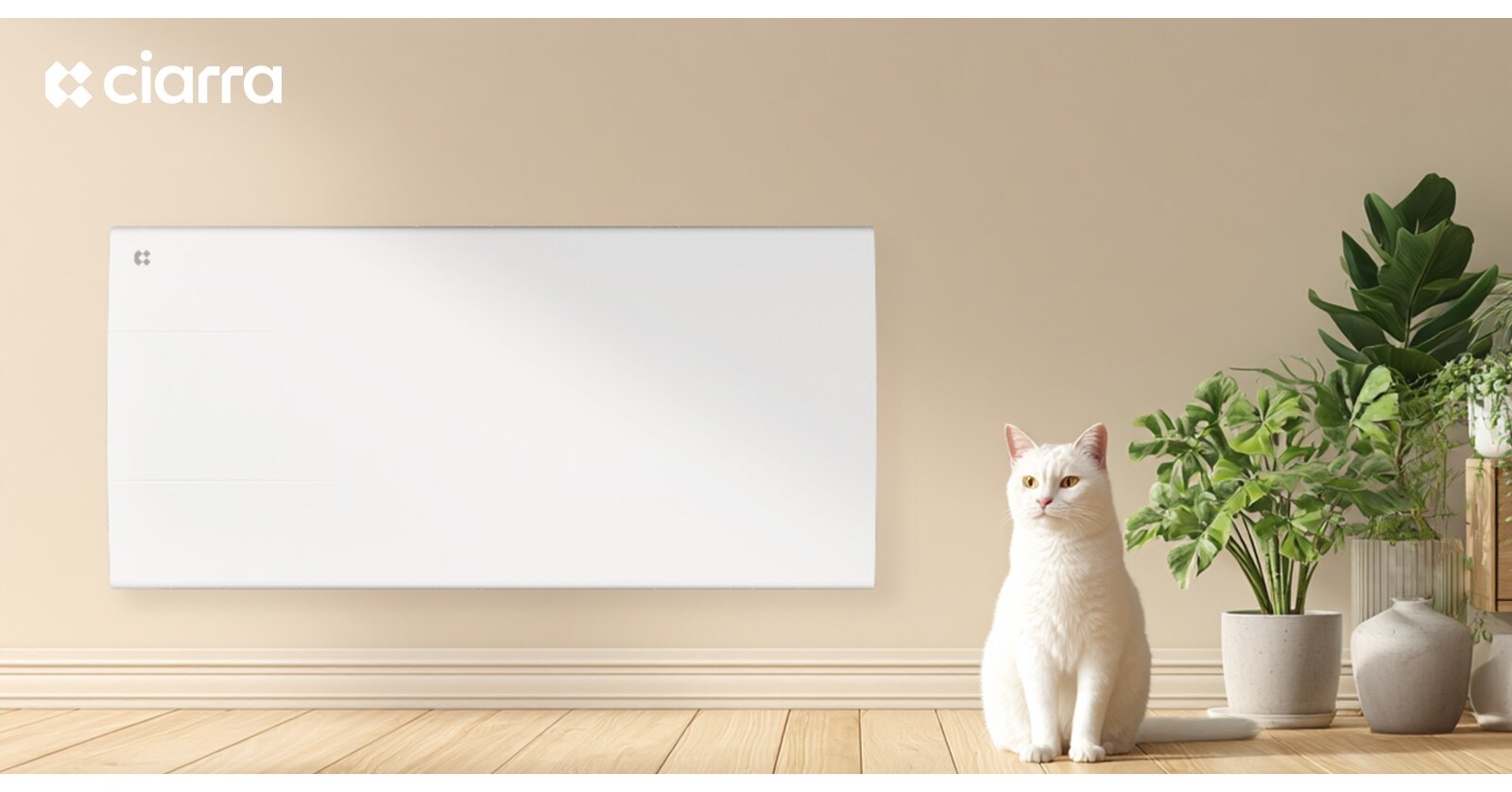
Ciarra launched a Smart Electric Heater Series for European homes, led by the WiFi-enabled 1500W flagship CBHTD15A-W for ~15m² spaces, featuring remote room-by-room control, <5-minute heat-up, weekly scheduling, open-window detection, and IP24 bathroom suitability. The lineup spans 1000W/1500W/2000W ceramic inertia radiators (including dual-core dry ceramic WiFi models) plus a convection option (CBHX20-B), marketed as more programmable and energy-conscious room heating. The announcement is a product expansion with limited indicated near-term market impact.
This reads as a category test, not an earnings event. The only investable mechanism is whether European consumers are shifting toward point-heat solutions as a hedge against utility volatility, but that is a budget-share trade, not a large enough TAM shift to matter for listed home-appliance or energy names in the near term.
If there is any winner, it is the e-commerce/distribution layer and whichever contract manufacturers supply thermostats, heaters, WiFi modules, and safety components. The more interesting second-order effect is margin, not volume: smart features, scheduling, and moisture protection support a premium SKU, which can lift ASPs and reduce returns versus commodity space heaters. The loser set is mostly incumbent low-end import brands and, at the margin, gas-heating service demand in households that adopt room-by-room electric heating instead of running central systems.
The catalyst path is weather and power prices. A cold winter with sticky European gas and electricity prices would create a 1-3 month demand tailwind; a warm winter or easing utility bills would quickly make this noise. Over 6-18 months, the structural risk is that consumers buy once and churn out quickly if running costs disappoint, so any brand lift is likely ephemeral unless Ciarra converts this into a broader smart-home ecosystem.
Contrarian take: the market may overstate how much "smart heating" changes behavior. For most households, usage is dominated by electricity cost per kWh, so better controls matter less than headline tariffs; that caps upside for the category. The more durable implication is that tight EU energy budgets continue to favor modular appliances and online-first brands, but this is still too small to justify a public-market trade on its own.
AI-powered research, real-time alerts, and portfolio analytics for institutional investors.
Request DemoOverall Sentiment
neutral
Sentiment Score
0.10
