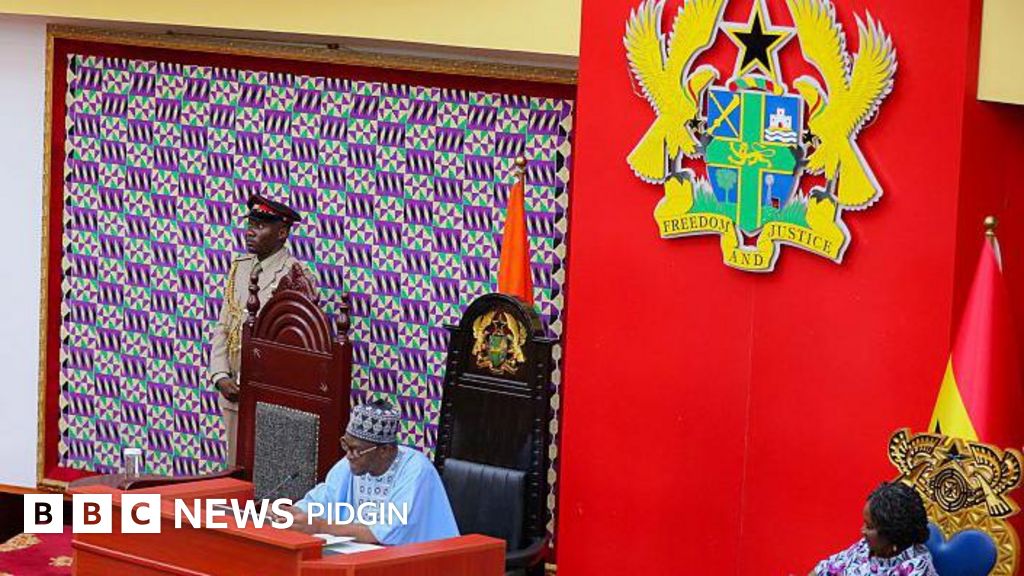
Ghana’s parliament has passed a revised anti-LGBTQ bill that keeps the existing penalty of up to 3 years in prison for same-sex activity and adds 3-5 year jail terms for funding or sponsoring LGBTQ activities. The updated version removes sanctions for journalists, media groups, medical professionals, and some legal/counseling services, but it still faces criticism over human-rights concerns and now goes to the president for signature. The broader article places Ghana within a wider trend of restrictive LGBTQ legislation across Africa.
This is less an immediate market event than a medium-horizon sovereign-risk signal: Ghana is choosing symbolic domestic politics over legal finality, which raises the probability of a court/presidential standoff and keeps the issue live into the next 1-2 quarters. The near-term market effect is on country-risk premia, not direct earnings, because the real transmission channel is whether this reinforces a broader perception of policy unpredictability that can bleed into FDI decisions, donor relations, and ESG-screened capital allocation.
The second-order loser set is broader than the LGBTQ community. Multinationals with African regional hubs, development-finance-dependent projects, and consumer brands with visible inclusion policies may face tougher operating optics, higher compliance overhead, and slower hiring/retention in Ghana relative to peers. The more important competitive angle is regional: jurisdictions positioning themselves as governance- and rights-friendly can capture marginal capital from firms that are otherwise indifferent on the base case but sensitive to headline risk.
The contrarian read is that the direct economic damage may be overestimated in the next 3-6 months because most large investors do not reprice on a single domestic social issue unless it catalyzes sanctions, aid interruptions, or court paralysis. The bigger risk is cumulative: if the law becomes operational and litigation drags, it can become an ESG diligence test case that narrows Ghana’s investable universe versus Kenya, South Africa, and Morocco, especially for European asset allocators. Watch for rapid escalation only if the executive signs quickly or if international institutions start linking governance concerns to funding conditions.
The best tradeable expression is relative, not outright: short the most Ghana-sensitive regional EM exposure on any rally and rotate toward cleaner governance peers. In commodities, this is not a Ghana macro trade; the cleanest expression is in EM equities, private markets, and NGO/advisory-linked service providers rather than direct sovereign paper unless spreads gap on litigation risk.
AI-powered research, real-time alerts, and portfolio analytics for institutional investors.
Request DemoOverall Sentiment
mildly negative
Sentiment Score
-0.35
