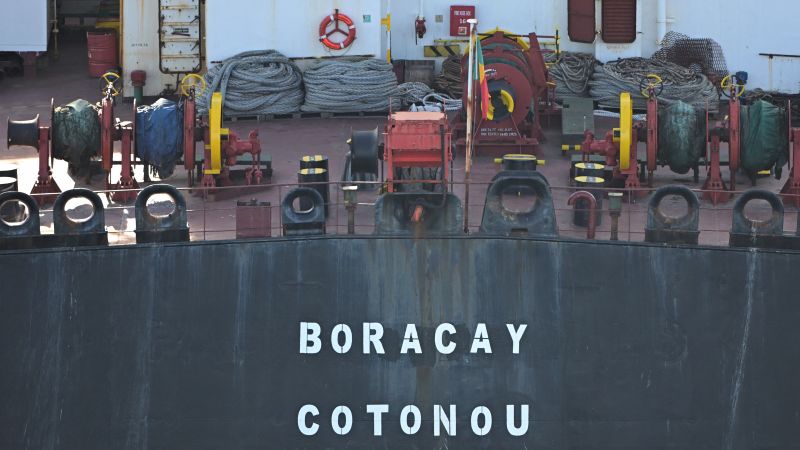
French police have arrested the captain and first officer of the sanctioned tanker Boracay following a naval boarding operation off Saint-Nazaire, alleging its operation within Russia's 'shadow fleet.' These arrests, based on non-compliance and failure to prove nationality, signify an escalating enforcement posture against vessels circumventing sanctions, a fleet estimated by President Macron to comprise 600-1000 ships. This action highlights increasing Western pressure on Russian oil transport and could portend broader maritime security and supply chain implications for institutional investors.
The arrest of senior crew from the sanctioned tanker Boracay by French authorities marks a significant tactical shift in the enforcement of sanctions against Russia's 'shadow fleet.' This direct intervention, involving French Navy commandos, moves beyond financial penalties to physical interception, setting a new precedent for Western nations. While the official charges relate to non-compliance and lack of nationality proof, the vessel's travel history coinciding with drone activity near critical Danish maritime routes—though unconfirmed as related—introduces a material security dimension to the incident. President Macron's public estimate of a 600- to 1,000-vessel shadow fleet underscores the scale of the circumvention operations, suggesting that if this enforcement model is replicated, it could introduce tangible friction into a substantial portion of Russia's seaborne trade. The Kremlin's ambiguous response points to the potential for further geopolitical escalation, elevating the risk profile for maritime operations in the region.
AI-powered research, real-time alerts, and portfolio analytics for institutional investors.
Overall Sentiment
mixed
Sentiment Score
0.00
