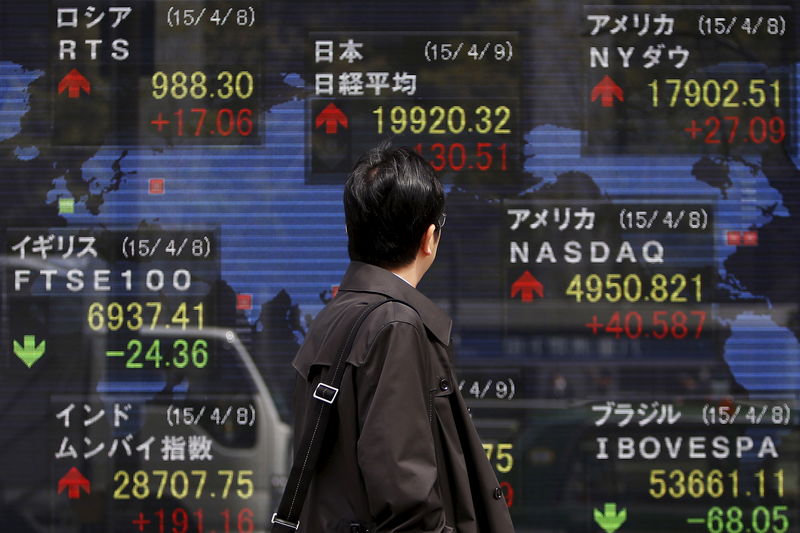
Brent and WTI topped $100 a barrel as U.S.-Iran tensions and Strait of Hormuz disruption risks kept energy markets elevated, adding to inflation pressure ahead of the Federal Reserve decision. Australia’s Q1 CPI accelerated to about 1.4% q/q and the mid-4% range y/y, reinforcing hawkish RBA expectations, while Asia equities were mixed and Hua Hong Semiconductor fell more than 7% on reports of possible new U.S. chip curbs.
The market is starting to price a classic inflation impulse with a geopolitical accelerator: higher crude is not just a tax on consumers, it raises the probability that rate-cut timing gets pushed out and that central banks sound more hawkish at the margin. That matters most for rate-sensitive assets, but the bigger second-order effect is on equity leadership: mega-cap growth can tolerate a lot, but the market usually punishes long-duration cash flows when both oil and policy uncertainty rise together. The move in Asian equities looks less like a broad risk-off and more like an early-stage rotation from quality growth into defensives, energy, and cash-generative cyclicals.
The most vulnerable pocket is Asia ex-Japan industrials and consumer discretionary, where margins are levered to fuel and import costs but pricing power is limited. Australia is the cleanest example: a hotter CPI print tied to energy is the kind of data that can force local banks and utilities to reprice quickly, while also keeping the AUD supported in the near term despite growth headwinds. In China/Hong Kong, the semiconductor headline risk is additive rather than standalone; any fresh export-control action will hit capex-heavy domestic foundries first, but the second-order winner is likely equipment and materials suppliers outside the direct target list, especially firms with non-China exposure and strong backlog visibility.
The contrarian point is that the oil move may be more about positioning and headline risk than durable supply loss unless the Strait of Hormuz disruption becomes physically persistent. If the blockading rhetoric de-escalates, crude can retrace quickly because the market is already long geopolitical premium and short volatility. That sets up a trading asymmetry: chase energy exposure only tactically, while looking to fade overbought beneficiaries once implied volatility in crude and inflation-linked rates peaks over the next 1-3 weeks.
AI-powered research, real-time alerts, and portfolio analytics for institutional investors.
Request DemoOverall Sentiment
mildly negative
Sentiment Score
-0.20
