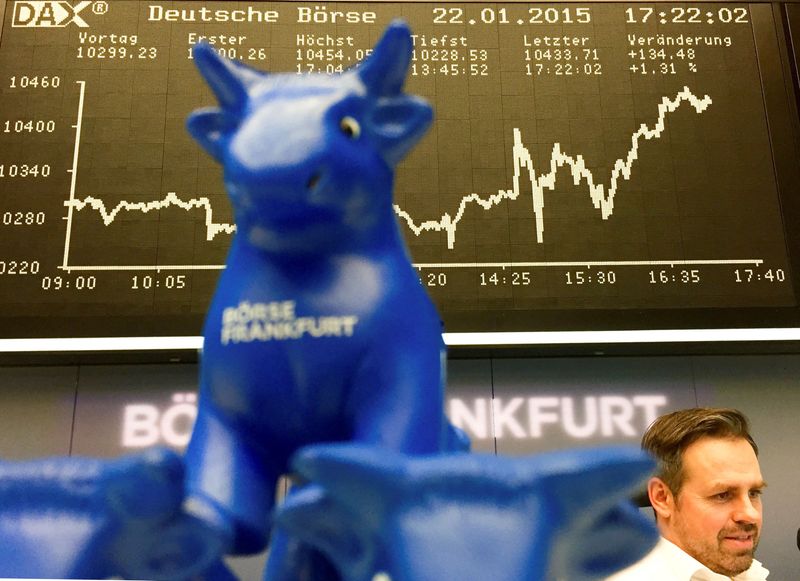
European equities traded lower, with the Stoxx 600 down 0.4%, Germany's DAX off 0.5%, and the FTSE 100 down 0.6%, as investors weighed renewed Middle East tensions around the Strait of Hormuz. Brent crude moved back above $100 a barrel after Iran attacked three ships and seized two near the strait, reinforcing supply-disruption risk for about a fifth of global oil flows. The CAC 40 outperformed, up 0.3%, helped by L’Oreal's fastest quarterly growth in two years.
The market is starting to separate headline risk from flow risk. Even if the Strait of Hormuz remains the dominant day-to-day catalyst, the first-order equity impact is now less about broad beta and more about who can pass through higher input costs without demand destruction: consumer staples with pricing power, luxury with affluent end-demand, and defensives tied to regulated or contracted revenue should hold up better than cyclicals with thin margins. The second-order loser is European industrials and transport-heavy names that have already been absorbing weaker PMIs; a renewed oil spike effectively taxes the same consumer base that was beginning to stabilize.
The more interesting setup is not the immediate equity index move but the persistence of an inflation impulse. A sustained crude move above the psychological threshold quickly bleeds into shipping, jet fuel, trucking, and petrochemical costs, which compresses forward earnings multiples even if spot earnings look okay for a few weeks. That argues for looking through the current noise toward sector dispersion over 1-3 months, especially as rate-cut expectations become more fragile if energy keeps repricing upward.
The contrarian read is that this may be a better environment to fade complacency than to chase crude outright. Once the market stops reacting to each escalation headline, downside in equities can become more pronounced because positioning has already adjusted to the “risk event” framing while earnings estimates have not yet fully caught up. The most vulnerable pockets are consumer discretionary, airlines, logistics, and European exporters with high energy intensity; the beneficiaries are those with explicit inflation linkage, cash-rich balance sheets, or direct exposure to energy prices.
AI-powered research, real-time alerts, and portfolio analytics for institutional investors.
Request DemoOverall Sentiment
mildly negative
Sentiment Score
-0.20
